
What Is Electrical Grounding?
Electrical grounding is the intentional connection of electrical equipment and circuits to the earth or a grounding system. The connection gives unwanted electrical current a controlled path away from exposed metal and toward the source. Grounding supports fault clearing, limits voltage on equipment enclosures, and helps keep a wiring system stable during normal operation.
Quick Facts About Electrical grounding
Category
Electrical safety and wiring system
Used for
Fault-current paths and equipment protection
Common confusion
Grounding is not the same as bonding
Also called
Grounding, Earthing
Often discussed with
Whole-home rewiring
Key Takeaways About Electrical grounding
- Grounding provides a deliberate path for unwanted electrical current.
- Grounding differs from bonding, which connects conductive parts together.
- A neutral wire is not automatically an equipment grounding conductor.
How Electrical grounding Works
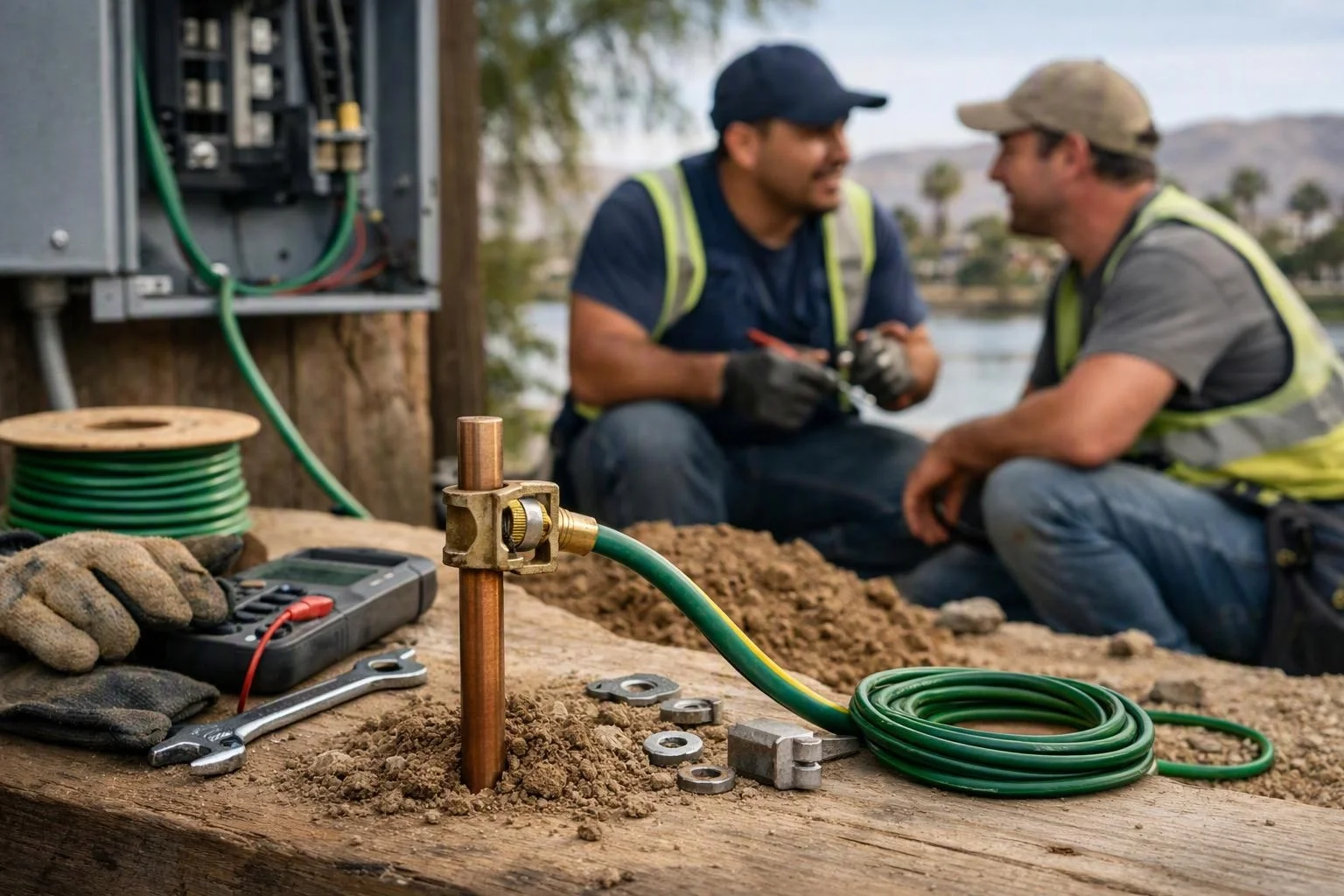
Electrical grounding connects a circuit or equipment enclosure to a grounding path that leads toward the electrical source and, in many systems, the earth. Under normal conditions, current stays on the intended circuit conductors. If insulation fails and energized wire touches metal, the grounding path carries fault current back toward the source.
Related glossary terms: Ground fault, Neutral wire, Service entrance.
A grounding electrode connects a system to the earth, while an equipment grounding conductor connects circuit equipment to the grounding system. These parts serve related purposes but do not replace each other. Grounding differs from bonding because bonding joins conductive parts so they remain at a similar electrical potential. During whole-home rewiring, electricians trace grounding paths from receptacles and equipment back through the branch circuits and panel.
From the Center Electric Service team
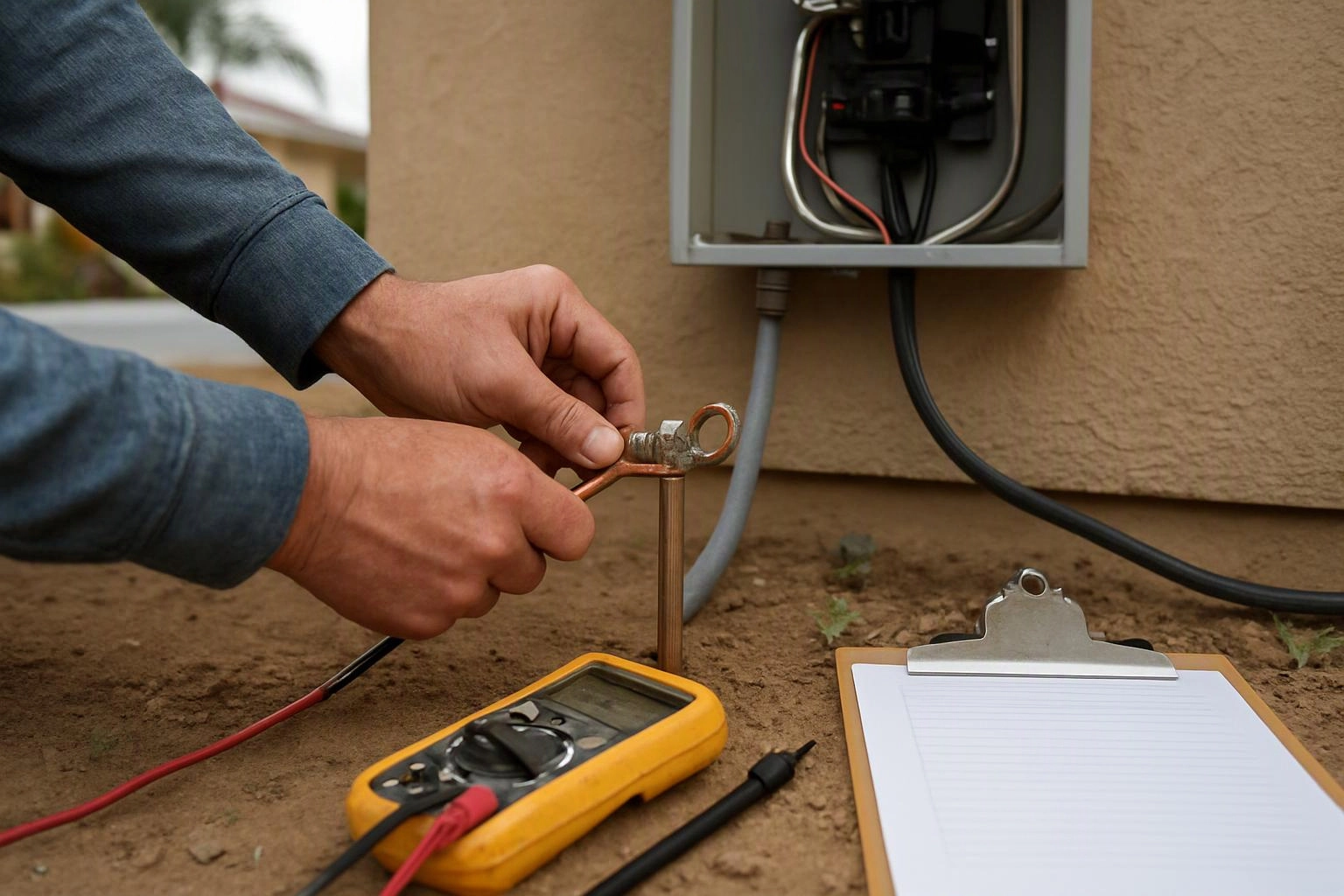
When we work on whole-home rewiring, we trace grounding conductors from receptacles and equipment back to the panel. Our team checks that connections are continuous, secure, and matched to the circuit layout. We also distinguish grounding from bonding when reviewing older wiring.
Electrical grounding in Practice: A Real-World Example
During a whole-home rewiring project, a new receptacle grounding conductor connects the receptacle's grounding terminal to the grounding path in the circuit. If a fault energizes the metal box, that path carries current back toward the source so the protective device can respond.
Related Services
Related Terms
Ground fault
Ground fault is an unintended electrical connection between an energized conductor and grounded metal, equipment, or…
Neutral wire
Neutral wire is the grounded conductor that carries current back to the electrical panel after power…
Service entrance
Service entrance is the point and equipment where electrical power enters a building from the utility…
Wire gauge
Wire gauge is a standardized system for describing a conductor's diameter and current-carrying capacity. Gauge numbers…
Center Electric Service
Have Questions About Electrical grounding?
Contact Center Electric Service for practical guidance on Electrical grounding and related electrical services work in Riverside.