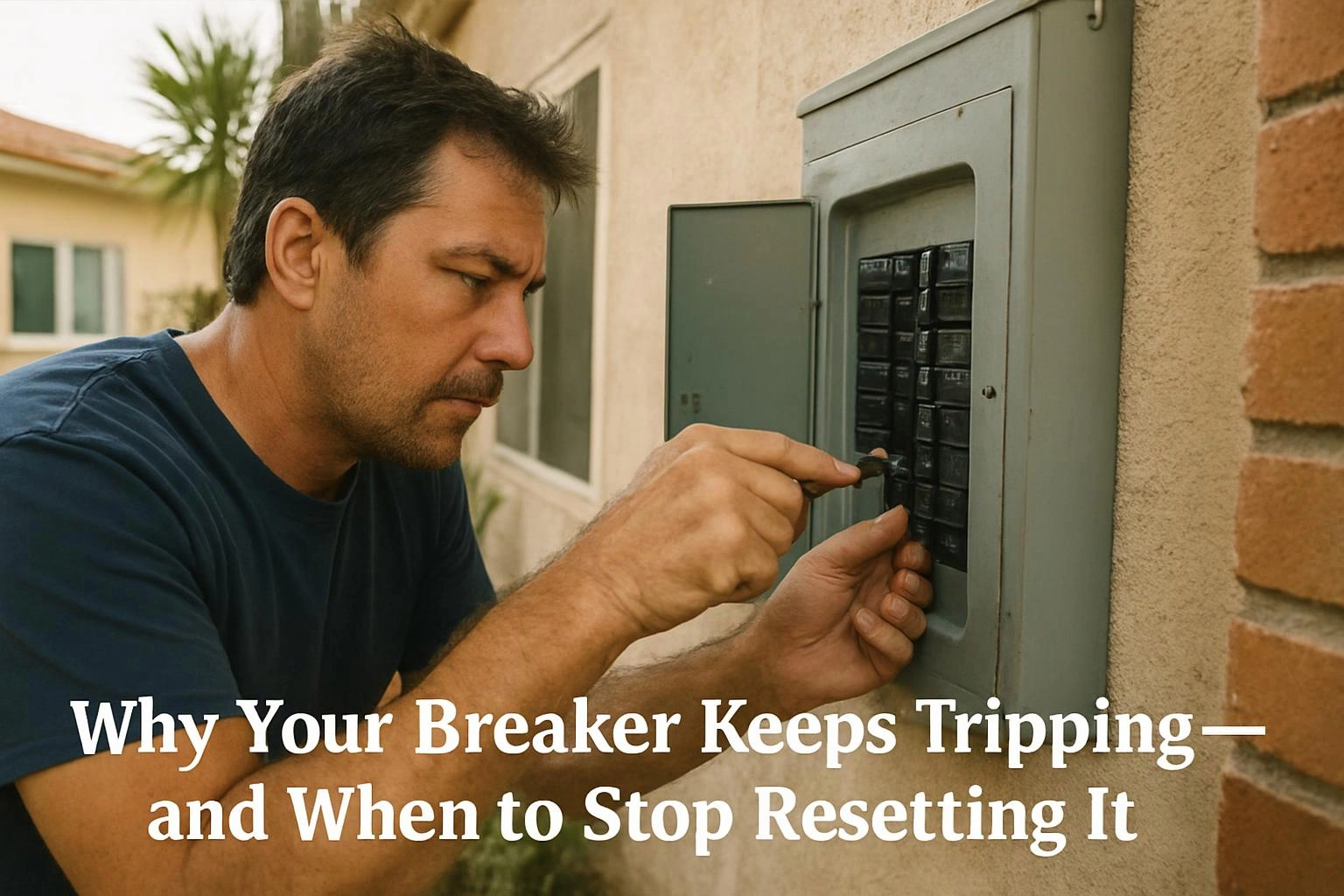
Why Your Breaker Keeps Tripping — and When to Stop Resetting It
A breaker keeps tripping because it detects a circuit problem, such as an overload or a fault. Stop resetting a breaker that trips again, and contact Center Electric Service to check the cause.
Get a Free EstimateWhy Does a Breaker Keep Tripping?
A circuit breaker is an electrical protection device that shuts off power when it detects a problem. This protective trip can point to an overloaded electrical circuit or a fault. The breaker itself can also be faulty.
We check the circuit and breaker to find the cause. A trip is a warning, not a problem to ignore.
Signs of a Breaker or Circuit Problem
A tripping breaker or a change near an outlet can signal an electrical problem. Tell us what you noticed so we can focus our inspection.
When Should You Stop Resetting a Breaker?
Stop resetting a breaker if it trips again or won't stay reset. Don't touch the panel if you notice heat, smoke, or a burning smell. Move away and call emergency services if there's smoke or fire.
Repeated trips can signal a dangerous fault. We'll check the cause before recommending work.
Common Causes of Breaker Trips
Breaker trips can come from excess demand, a fault, or a worn breaker. We look at the trip pattern and inspect the circuit to narrow down the cause.
Why Does a Breaker Trip With Nothing Plugged In?
A breaker can trip with nothing plugged in because wiring, hardwired equipment, or the breaker may have a fault. A ground fault can also remain on the circuit. We'll inspect the circuit and connected equipment to identify the cause.
What Does It Mean if a Breaker Trips Immediately or Won't Reset?
A breaker that trips immediately or won't reset may have a persistent circuit fault or a faulty mechanism. Stop resetting it and contact us for Circuit Breaker Repair. We'll use electrical troubleshooting to find out what's causing the trip.
How Can You Help Prevent Breaker Trips?
You can help prevent breaker trips by reducing excess demand and watching for damage. If trips return, we'll check the circuit for an underlying problem.
How Do We Diagnose and Fix a Tripping Breaker?
We check the breaker and circuit to identify the fault before recommending a repair or replacement. We consider applicable code and inspection requirements when planning the work.
Our inspection can include the panel, wiring, and connected equipment. We'll explain whether the problem calls for circuit repairs or Circuit Breaker Replacement.
Contact Center Electric Service to arrange an inspection and discuss the work your circuit needs. Free Estimates Available
Get a Free EstimateWhat Are the Key Specifications to Know?
- Topic Focus
- Why Your Breaker Keeps Tripping — and When to Stop Resetting It
- Related Core Service
- Circuit Breaker Repair
- Evaluation Method
- On-Site Inspection & Written Scope
- Compliance Standard
- Local Building Code & Manufacturer Specs
How Does the Evaluation & Execution Process Compare?
| Evaluation Stage | Technical & Quality Criteria | Timeline Checkpoint |
|---|---|---|
| Initial Diagnostic & Assessment | Identify root cause, site constraints & code requirements | Before any work begins |
| Written Scope & Option Comparison | Compare repair vs. replacement tiers & material grades | Prior to project approval |
| Code-Compliant Execution | Follow manufacturer specs & local permitting standards | During active service |
| Final Verification & Walkthrough | Verify installation alignment, performance & clean site handoff | Upon project completion |