Circuit Breaker Repair and Replacement: Signs and Options
Circuit breaker replacement is worth considering when a breaker repeatedly trips, shows heat or damage, fails to reset, or no longer matches the circuit; Center Electric Service diagnoses the cause and recommends repair or replacement based on safety and panel condition.
Get a Free EstimateWhen Should You Consider Circuit Breaker Replacement?
Circuit breaker replacement should be considered when the breaker repeatedly trips after the underlying cause is addressed, shows heat or physical damage, will not reset, or is unsuitable for the circuit.
A circuit overload can trip a breaker when the circuit load is too high. A short circuit or another electrical fault can also cause a trip. We inspect the electrical panel and connected wiring before deciding whether the breaker itself needs replacement.
Breaker compatibility matters because the replacement must match the electrical panel and the circuit design. We do not treat a replacement as a solution until we identify the cause of the fault.
What Signs Suggest a Circuit Breaker Needs Professional Repair?
Circuit breaker repair needs professional attention when repeated trips, unusual sounds, burning odors, discoloration, heat, or unreliable operation point to a wiring or breaker fault.
A repeatedly tripping breaker may indicate an overload, loose connection, or circuit fault. Burn marks, a burning smell, a hot breaker, buzzing, or a crackling sound can point to heat damage or an unsafe connection.
A breaker handle that feels loose or a breaker that will not reset also needs inspection. We check the breaker, terminal, bus connection, and circuit wiring to locate the source of the problem.
How Do Circuit Breaker Repair and Replacement Compare?
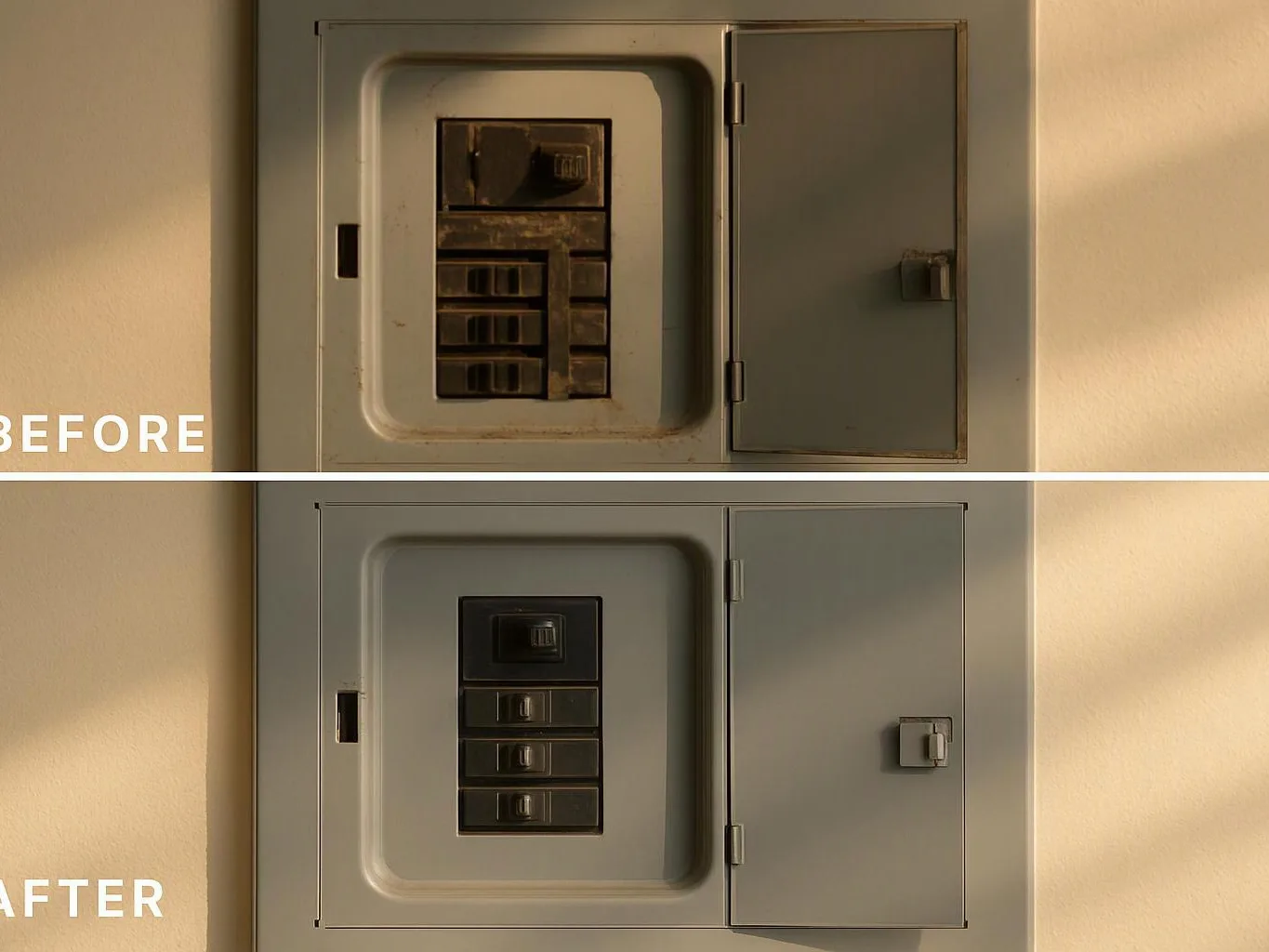
Electrical troubleshooting determines whether circuit breaker repair or circuit breaker replacement provides the safer answer. Repair addresses a repairable connection or related fault, while replacement installs a compatible breaker when the existing device is damaged, defective, or unsuitable.
Cost depends on the fault, access, equipment compatibility, panel condition, and related circuit work. We explain the work covered by our estimate before completing the selected option.
| Factor | Option A: Circuit Breaker Repair | Option B: Circuit Breaker Replacement |
|---|---|---|
| Cost | Usually lower when the breaker and panel remain suitable; cost depends on the fault, access, and required testing. | Usually higher when a compatible breaker, panel work, or related correction is required; cost depends on equipment compatibility and the condition of the circuit. |
| Timeline | Often involves diagnosing the fault, correcting the connection or related issue, and testing the circuit. | Involves identifying a compatible breaker, installing it safely, and testing the circuit and panel. |
| Maintenance | The repaired circuit still needs monitoring for recurring trips, heat, noise, or other warning signs. | The replacement breaker still needs correct circuit loading and monitoring for recurring trips or signs of an underlying fault. |
| Best for | A sound breaker with a repairable connection or an identified electrical fault elsewhere in the circuit. | A damaged, defective, repeatedly unreliable, or improperly matched breaker. |
What Are the Advantages of Circuit Breaker Repair?
Circuit breaker repair can preserve suitable equipment when circuit diagnosis identifies a repairable issue. We confirm the panel condition and electrical connection before repairing the fault.
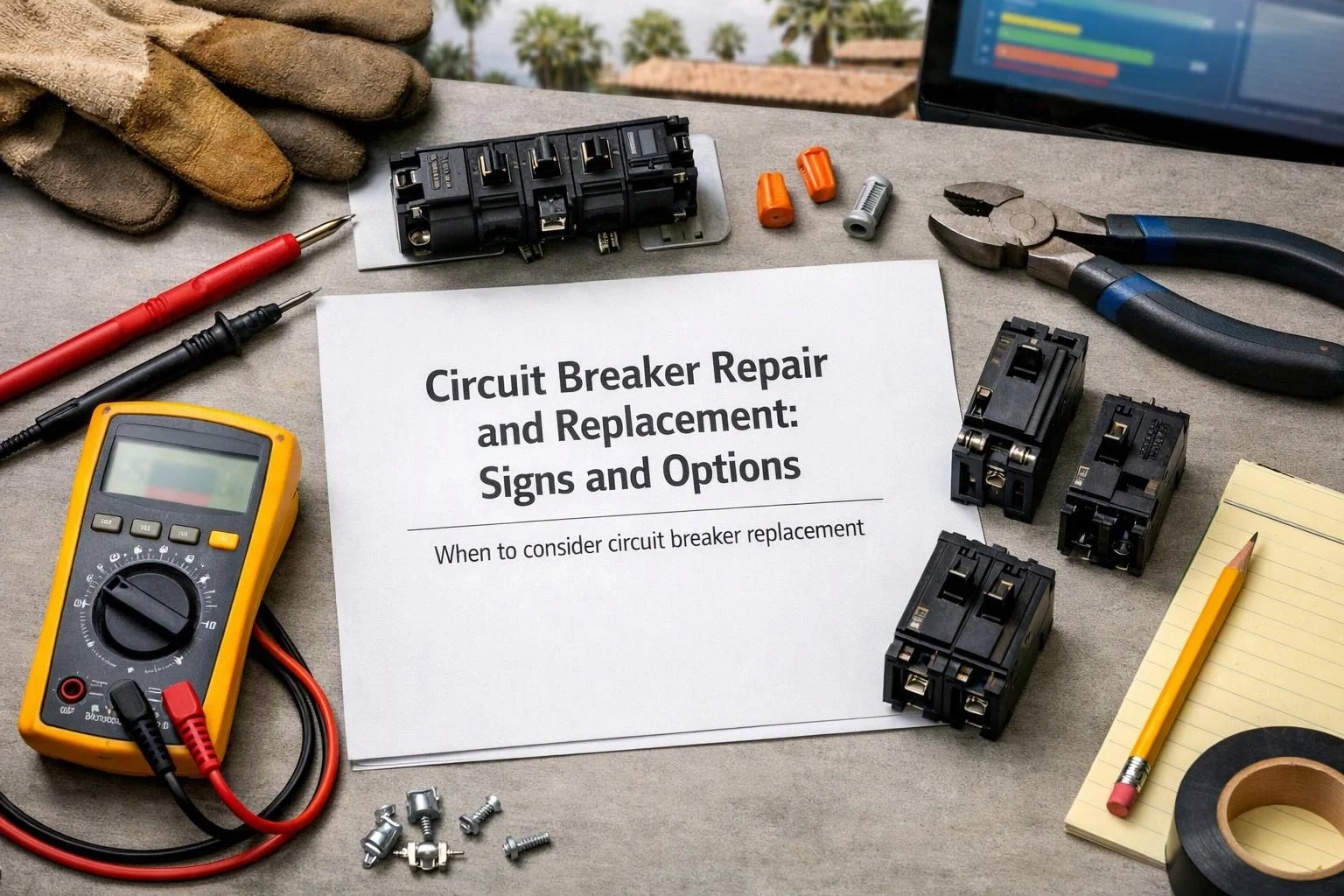
Best for: circuit breaker repair fits a sound breaker with an identified repairable electrical fault.
How Do You Know Circuit Breaker Repair Is the Better Option?
Circuit breaker repair is the better option when the breaker condition is sound and circuit testing identifies a repairable electrical fault.
We inspect the connection, wiring, circuit load, and panel condition. Repair makes sense when the breaker can provide reliable overcurrent protection after the related fault is corrected.
What Are the Advantages of Circuit Breaker Replacement?
Circuit breaker replacement restores circuit protection when the existing device is damaged, failed, or unsuitable for the electrical panel. We select a compatible breaker and test the completed installation.
Best for: circuit breaker replacement fits a damaged, defective, repeatedly unreliable, or improperly matched breaker.
How Do You Know Circuit Breaker Replacement Is the Better Option?
Circuit breaker replacement is the better option when a damaged circuit breaker or failed breaker cannot provide reliable protection.
We verify breaker compatibility, panel capacity, circuit wiring, and the reason for the failure. Replacement is appropriate when the existing device is unsuitable even after related circuit faults are addressed.
How Does Center Electric Service Assess a Tripping Breaker?
Electrical troubleshooting identifies the reason for the trip, checks the breaker and connected circuit, determines whether repair or replacement is appropriate, and explains the work covered by the estimate, with Free Estimates Available.
Our team uses breaker testing and electrical panel inspection to separate a circuit overload from a short circuit, ground fault, breaker failure, or another issue.
For the repair option, see Circuit Breaker Repair.
What Should You Do When a Circuit Breaker Keeps Tripping?
A repeatedly tripping circuit breaker should remain off when resetting it does not solve the problem or when heat, odor, noise, or visible damage is present.
You can unplug recently connected appliances and note which circuit is affected. This information helps us identify possible appliance load concerns during electrical troubleshooting.
Electrical safety depends on keeping the circuit isolated until the cause is understood. We inspect the circuit before recommending a reset, repair, or replacement.
Which Circuit Breaker Service Fits Your Situation?
Circuit breaker repair fits a diagnosed, repairable fault, while circuit breaker replacement fits a damaged, failed, or incompatible breaker; Center Electric Service determines the suitable option after testing.
Our recommendation considers the circuit fault, breaker condition, electrical panel, circuit load, and safety risk. We explain the selected work and what the estimate covers before proceeding.
Questions About Circuit Breaker Repair and Replacement
Can a circuit breaker keep tripping without needing replacement?
Yes, a circuit breaker can keep tripping because of an overload, short circuit, ground fault, loose connection, or another circuit issue. Center Electric Service tests the circuit to determine whether the breaker or a related fault needs attention.
Is it safe to keep resetting a circuit breaker?
No, repeated resetting is not safe when the breaker continues to trip or shows heat, odor, noise, or visible damage. Keep the circuit off and contact us for testing.
What happens if a replacement breaker does not match the electrical panel?
A breaker that does not match the electrical panel may not provide suitable circuit protection or safe mechanical and electrical connections. We verify breaker compatibility before installation.
Can a damaged breaker cause an electrical fire risk?
Yes, a damaged breaker can create an electrical fire risk when heat damage, arcing, or a poor connection is present. Keep the circuit off and contact us when you notice burn marks, a burning smell, buzzing, crackling, or unusual heat.
Circuit breaker repair and circuit breaker replacement both require testing to confirm the cause and protect the circuit. Center Electric Service explains the safest option for the breaker, wiring, and electrical panel.
Contact Center Electric Service to discuss your circuit breaker concern and request an estimate.
Related Resources
Electrical Troubleshooting Providers Worth Comparing in Riverside (2026)
Brand vs BrandCircuit Breaker Repair Companies Worth Comparing in Riverside (2026)
What It SolvesElectrical Readiness for a Heat-Pump Water Heater
What It CostsEmergency Electrician Cost Factors: What Affects a 24-Hour Electrical Repair Quote