
What Is Circuit Overload?
Circuit overload is a condition in which connected electrical devices draw more current than a circuit can safely carry. The excess demand can heat conductors and cause the circuit breaker to trip. Overload usually results from too many high-demand devices sharing one circuit, not from a fault between energized conductors.
Quick Facts About Circuit overload
Category
Electrical fault condition
Used for
Diagnosing repeated breaker trips
Common confusion
Often confused with an electrical short
Also called
Overloaded circuit
Often discussed with
Electrical troubleshooting and diagnostics
Key Takeaways About Circuit overload
- Overload develops from excessive demand on one circuit.
- A breaker trip can interrupt an overloaded circuit.
- An overload differs from a short circuit.
How Circuit overload Works
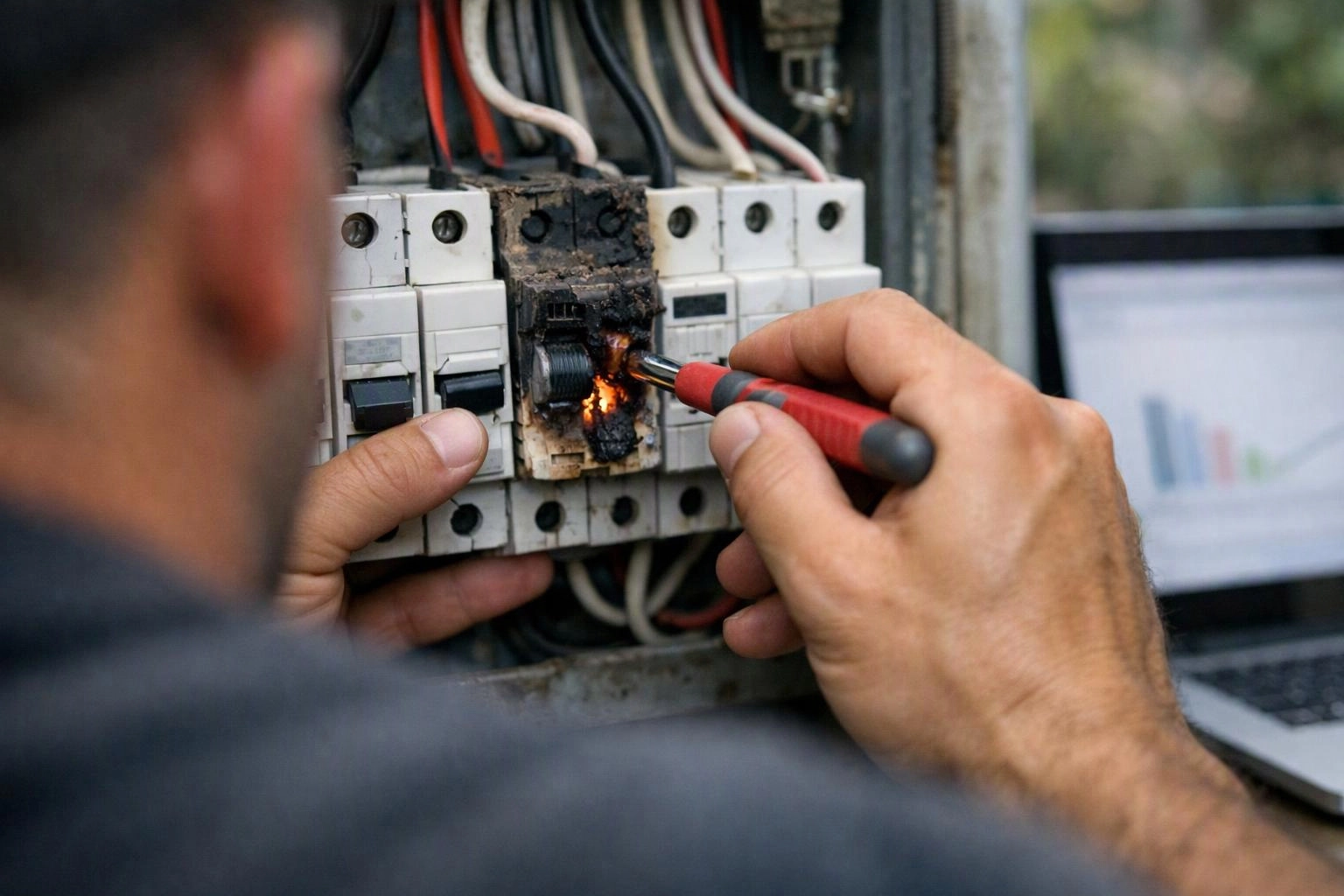
Circuit overload begins when connected loads demand more current than the circuit wiring and protective device are designed to carry. Current rises as devices operate together. Heat can build in conductors, connections, and the breaker, which may open the circuit to stop power flow.
Related glossary terms: Breaker trip, Circuit breaker, Electrical short.
A diagnostic check considers which devices were running, when the breaker opened, and whether the condition returns after a device is removed. A circuit breaker responds to excessive current over time, while a short circuit creates a much more direct fault path. An electrician may inspect load distribution, connection points, and equipment operation to separate these conditions. A circuit may also overload when one appliance develops an internal electrical problem, so the connected device deserves attention as well.
From the Center Electric Service team
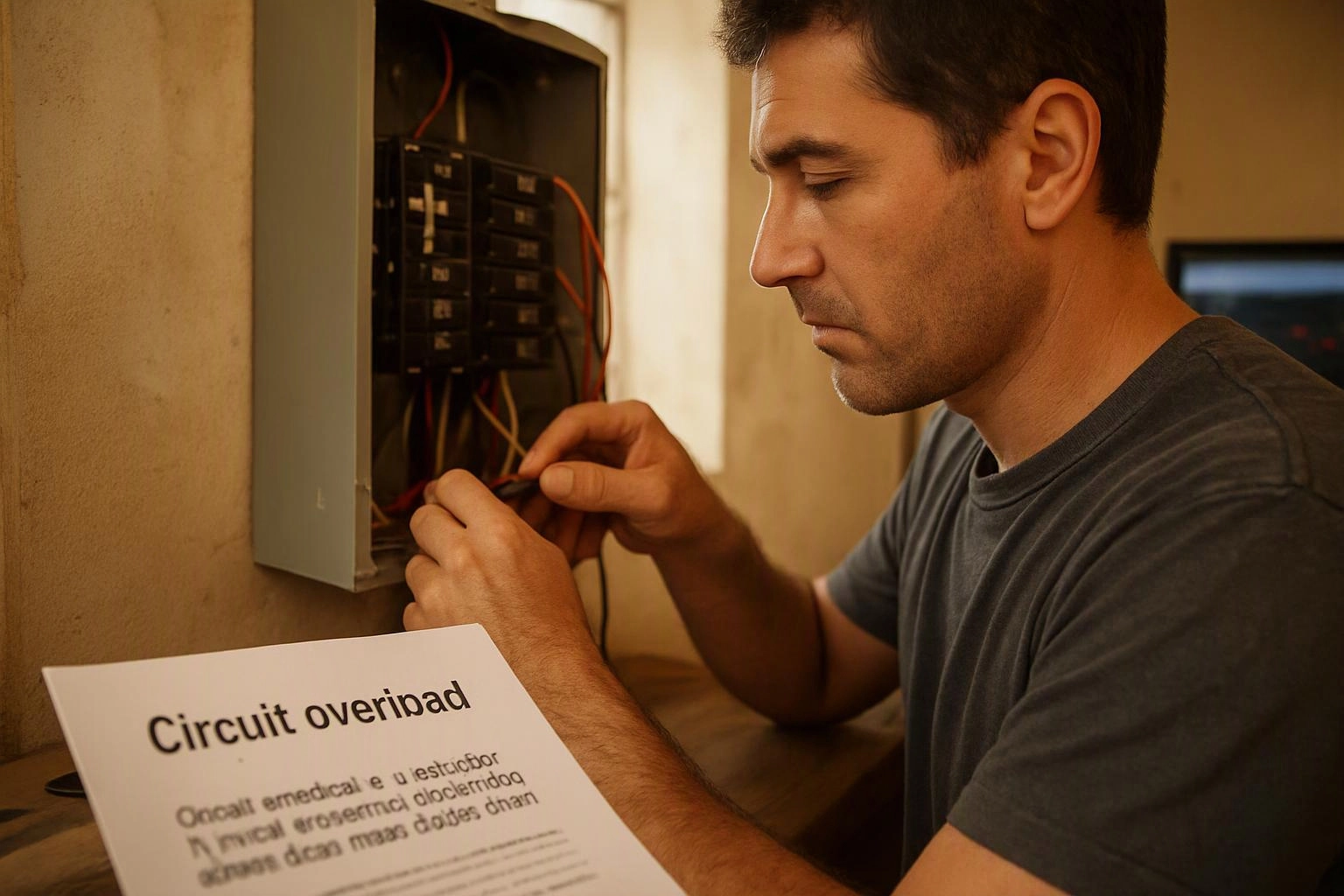
When we investigate a suspected circuit overload, we identify the devices operating during the event and inspect the circuit, breaker, and accessible connections. We also check whether one appliance creates the demand or whether the circuit serves too many loads. That distinction helps guide the next diagnostic step.
Circuit overload in Practice: A Real-World Example
A kitchen circuit may trip when a toaster and portable heater operate at the same time. During electrical troubleshooting and diagnostics, we identify the active loads and check whether one device or the circuit arrangement caused the interruption.
Related Services
Related Terms
Breaker trip
Breaker trip is the automatic opening of a circuit breaker when electrical current exceeds a safe…
Circuit breaker
A circuit breaker is an electrical switching device that interrupts current when a circuit develops an…
Electrical short
An electrical short is a fault that creates an unintended low-resistance path for current between conductors…
Load calculation
Load calculation is an engineering assessment of the electrical demand a property or circuit may place…
Center Electric Service
Have Questions About Circuit overload?
Contact Center Electric Service for practical guidance on Circuit overload and related electrical services work in Riverside.