
What Is a Circuit Breaker?
A circuit breaker is an electrical switching device that interrupts current when a circuit develops an unsafe condition, such as excessive load or a short. The breaker protects wiring and connected equipment by opening the circuit. After the cause is corrected, the breaker can usually be reset, unless damage or a continuing fault prevents safe operation.
Quick Facts About Circuit breaker
Category
Electrical protection device
Used for
Interrupting unsafe current flow
Common confusion
Confused with a fuse or disconnect
Also called
Breaker, Overcurrent protection device
Often discussed with
Electrical panel upgrade, Electrical troubleshooting and diagnostics
Key Takeaways About Circuit breaker
- A breaker can be reset after a temporary fault is corrected.
- Repeated trips point to an unresolved circuit problem.
- A breaker is not the same as a fuse.
How Circuit breaker Works
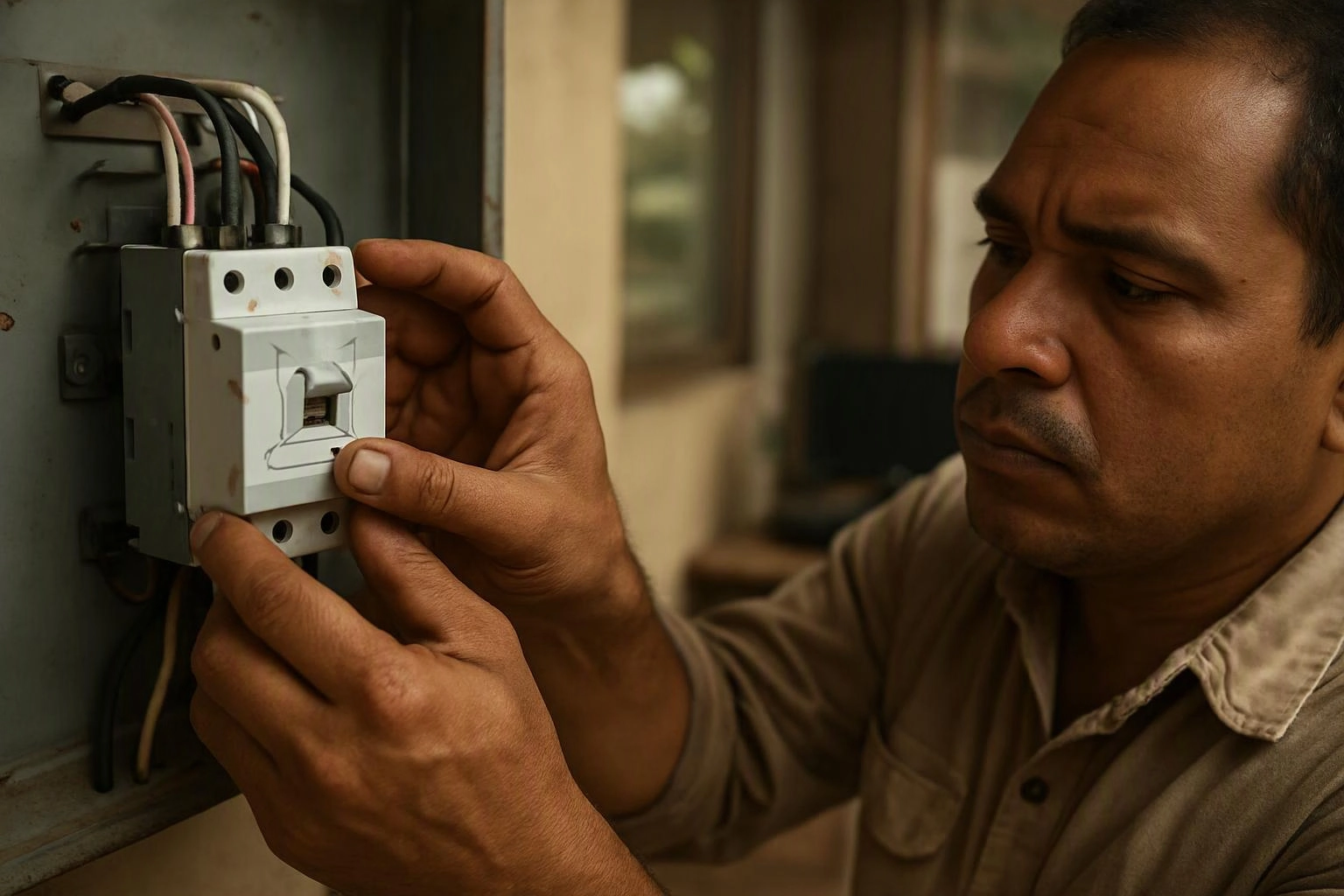
A circuit breaker monitors current moving through a branch circuit. Excessive current creates heat in the breaker and can trigger its internal release mechanism. A short circuit creates a much more sudden fault, which causes the contacts to open quickly. Opening the contacts stops power from continuing through the connected wiring.
Related glossary terms: Breaker trip, Circuit overload, Electrical short.
The breaker handle shows whether the circuit is on, off, or tripped. A tripped handle may rest between the normal positions and needs to be moved fully off before resetting. The busbar supplies power to the breaker inside the panel, while the breaker sends protected power to the branch circuit. A breaker that trips again needs diagnosis instead of repeated resets.
From the Center Electric Service team
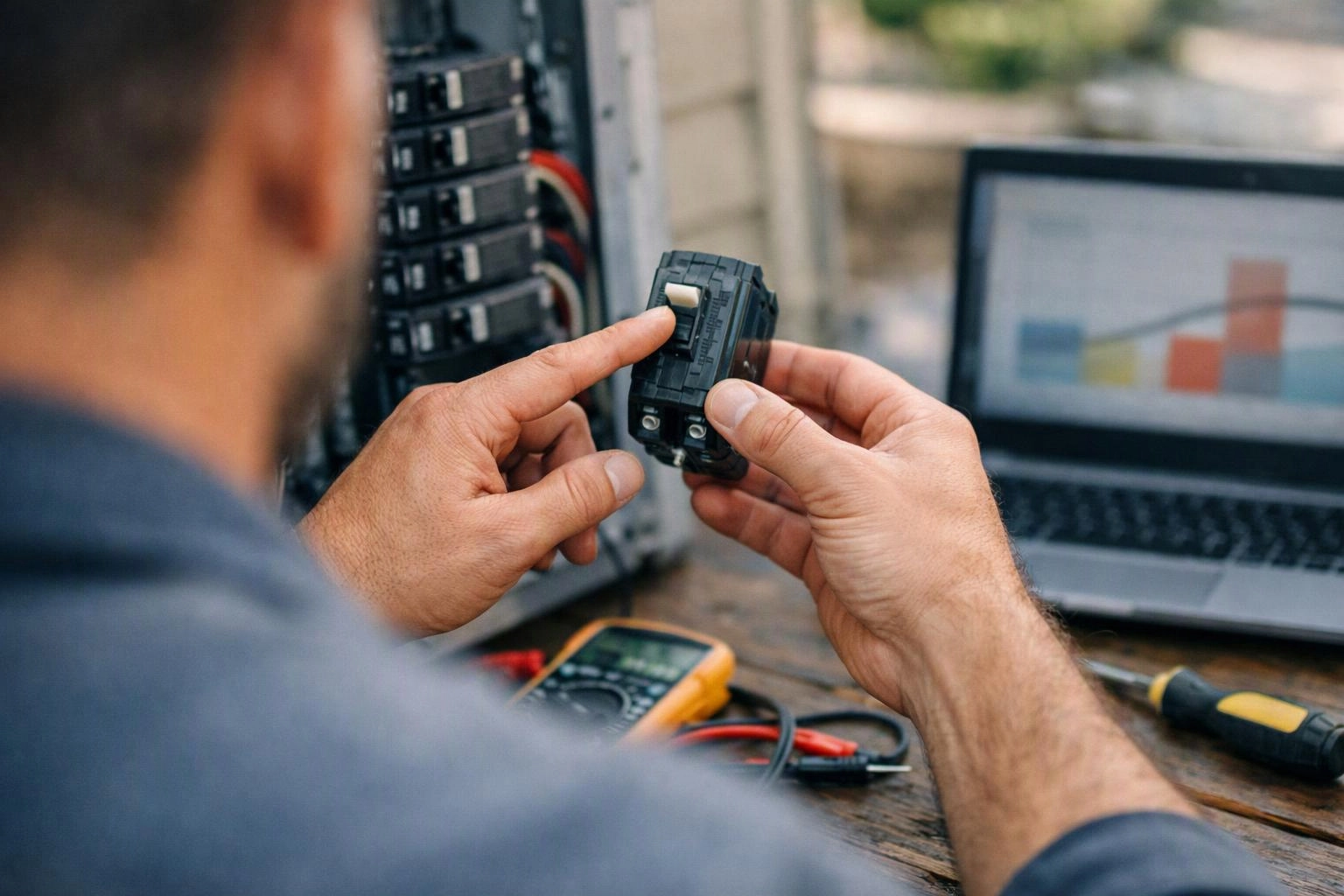
When we inspect a circuit breaker during an electrical panel upgrade, we check its connection, condition, labeling, and relationship to the circuit wiring. We also look for heat damage, loose terminations, repeated trips, and signs that the existing panel does not match the electrical load. Our team corrects the underlying issue before recommending a replacement.
Circuit breaker in Practice: A Real-World Example
During an electrical panel upgrade, a kitchen circuit may trip when several appliances operate together. We inspect the circuit, breaker connection, and wiring to determine whether the problem involves overload, a damaged device, or a panel condition.
Related Terms
Breaker trip
Breaker trip is the automatic opening of a circuit breaker when electrical current exceeds a safe…
Circuit overload
Circuit overload is a condition in which connected electrical devices draw more current than a circuit…
Electrical short
An electrical short is a fault that creates an unintended low-resistance path for current between conductors…
Busbar
Busbar is a conductive metal strip or bar inside electrical equipment that distributes power to multiple…
Center Electric Service
Have Questions About Circuit breaker?
Contact Center Electric Service for practical guidance on Circuit breaker and related electrical services work in Riverside.