Planning Electrical Outlet Installation and Repair
Planning a new electrical outlet installation starts with choosing the outlet location, identifying the electrical load, checking existing wiring, selecting the correct outlet type, and reviewing safety requirements. Center Electric Service assesses these factors, explains what the work includes, and provides Free Estimates Available.
Get a Free Estimate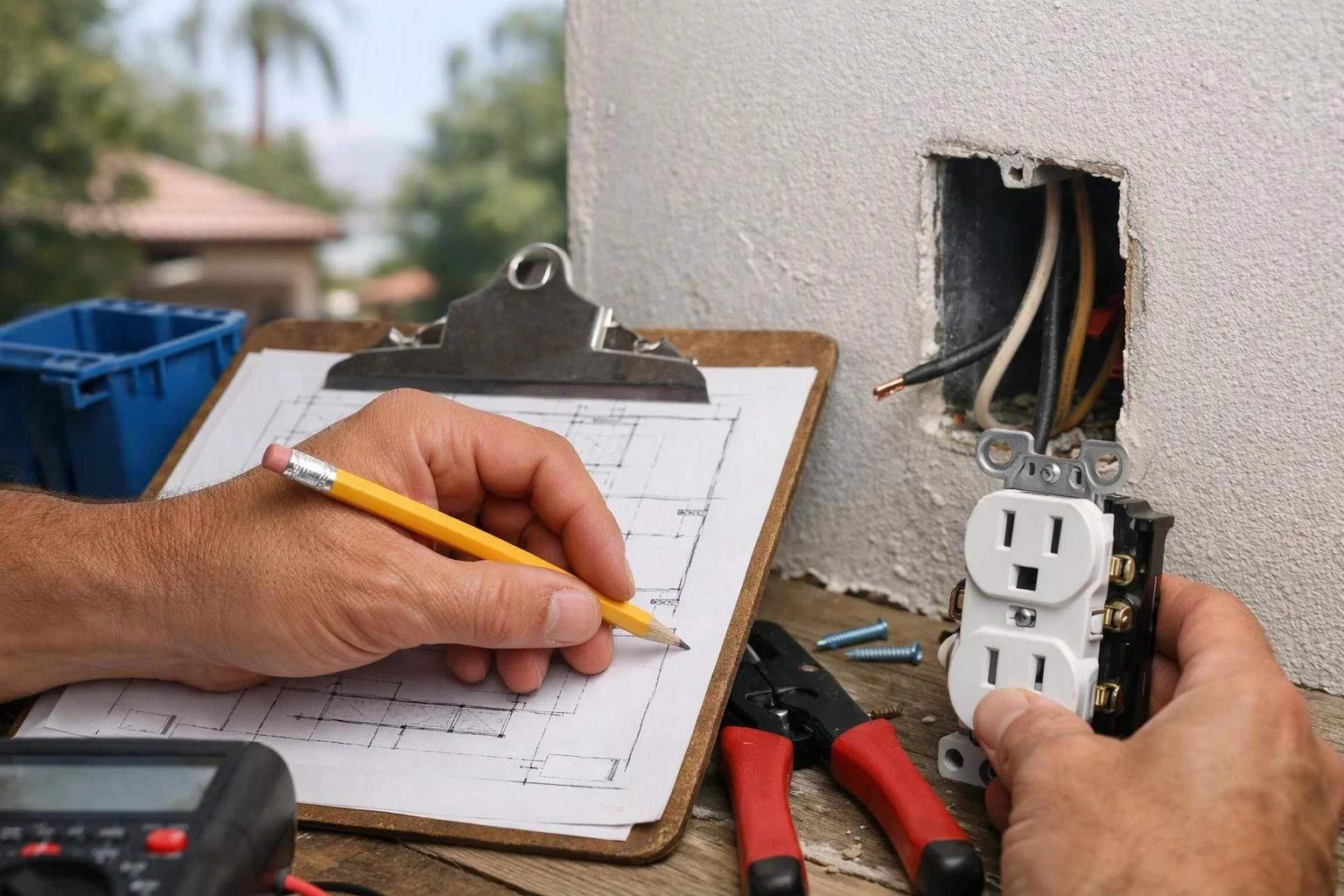
What to Check Before Planning a New Electrical Outlet
New outlet installation should begin with an assessment of the intended location, electrical demand, existing circuit, wiring condition, and access to the wall.
We review the outlet location and the building use before choosing a receptacle. A home office, kitchen appliance, workshop tool, or outdoor device may place different demands on the electrical circuit.
Our team checks circuit capacity, the electrical panel, and the condition of the electrical wiring. We also consider wall access because wire routing may require access through finished surfaces, an attic, a crawl space, or another reachable area.
How to Plan a New Electrical Outlet Installation
Planning a new electrical outlet installation involves defining the use, choosing the location, evaluating the circuit, selecting the outlet, and confirming safe installation requirements.
Choosing the Right Outlet for the Location
Outlet type depends on the location, the equipment, and the safety conditions around the receptacle. We match the outlet configuration to the intended use and the surrounding environment.
A standard receptacle may serve general indoor use. A GFCI outlet provides ground-fault protection where moisture may be present, while a tamper-resistant outlet can help reduce access to energized contacts. A weather-resistant outlet is designed for suitable outdoor use, and a dedicated outlet serves equipment that needs its own electrical circuit.
When Installation and Outlet Repair Belong in the Same Project
Electrical outlet installation and outlet repair belong in the same project when the new outlet depends on wiring or circuit conditions that also need correction.
Outlet repair may be needed when an existing receptacle shows signs of damage or unsafe operation. We assess the existing condition before expanding the circuit so the completed work supports safe use.
Situations That May Require Both Services
Both services may be needed when the planned outlet shares a circuit or wiring path with an unsafe existing connection. Our crew identifies the related condition and includes the needed correction in the project scope.
How Installation and Repair Work Together
Installation and repair work together when existing electrical conditions must be diagnosed and corrected before the new outlet can be installed safely.
We begin with electrical diagnosis and circuit assessment. That review helps us define the project scope and determine whether wiring repair must happen before the new outlet installation.
Where GFCI Outlet Installation May Be Considered
GFCI outlet installation may be considered in locations where electrical receptacles could be exposed to moisture or where ground-fault protection is required.
Common locations include a bathroom, kitchen, garage, or outdoor receptacle area. We review the location, the existing circuit, and the outlet's relationship to other receptacles before selecting the installation approach.
A GFCI outlet can interrupt power when it detects a ground fault. Our team also checks whether the surrounding wiring and grounding arrangement support safe operation.
What to Check When a GFCI Outlet Will Not Reset
A GFCI outlet that will not reset may indicate an active ground fault, a downstream problem, a tripped circuit breaker, or a wiring issue that needs assessment.
What to Consider Before Dryer Outlet Installation
Dryer outlet installation requires checking the dryer's electrical requirements, the dedicated circuit, the electrical panel, the outlet configuration, and the grounding arrangement.
We review the dryer voltage, amperage, and manufacturer requirements before selecting a dryer outlet. The dryer cord configuration must also match the outlet and the grounding arrangement.
Our team checks whether the electrical panel has suitable panel capacity for the dedicated circuit. We also inspect the circuit wiring and plan a safe route from the panel to the dryer location.
What Changes the Scope of an Outlet Installation Quote?
An outlet installation quote depends on the outlet location, circuit capacity, wire routing, wall access, wiring condition, outlet type, and applicable requirements. Center Electric Service explains the planned work and provides Free Estimates Available.
Distance between the outlet and electrical panel can change the wire routing and access work. Panel capacity may affect whether the existing electrical circuit can support the load or whether circuit changes are needed.
Wall access, wiring replacement, outlet configuration, grounding, and permit requirements also shape the project scope. We review these factors before preparing a quote so the work is clearly defined.
How Center Electric Service Approaches Outlet Planning
Center Electric Service approaches outlet planning through an electrical assessment that connects the requested installation with the condition of the existing system.
We review outlet placement, electrical load, circuit capacity, wiring condition, wall access, grounding, and outlet type. Our team can address new outlet installation, outlet repair, GFCI outlet installation, and dryer outlet installation as related electrical work.
We explain the project scope before work begins and identify any repair or inspection needs that affect safe installation. To discuss your electrical outlet installation or repair needs, contact Center Electric Service.
Questions About Electrical Outlet Installation and Repair
Can a new outlet be added to an existing circuit?
Yes, a new outlet can be added to an existing circuit when the circuit capacity, wiring condition, grounding, and intended load support the addition. Center Electric Service checks the circuit and electrical panel before planning the connection.
Why does a GFCI outlet keep tripping after installation?
A GFCI outlet may keep tripping because of an active ground fault, a downstream outlet problem, a wiring fault, moisture, or a circuit issue. We assess the GFCI, connected receptacles, circuit breaker, and wiring before restoring normal use.
Does a dryer need a dedicated electrical circuit?
Yes, a dryer generally requires a dedicated circuit that matches the dryer's electrical requirements and outlet configuration. We check the dryer voltage, amperage, panel capacity, circuit wiring, and grounding arrangement.
Can a damaged outlet be repaired before adding another outlet?
Yes, a damaged outlet can be repaired or replaced before another outlet is added when the existing condition affects safe circuit operation. We correct loose connections, damaged wiring, or an unsafe receptacle before completing the new installation.
What information should I provide when requesting an outlet installation quote?
Provide the intended outlet location, the device or appliance it will serve, known circuit details, visible wiring concerns, wall access conditions, and whether the outlet is indoors, outdoors, or near moisture. Center Electric Service uses these details to plan the assessment and explain the quote.
Contact Center Electric Service to plan a new electrical outlet installation, address outlet repair, or review GFCI and dryer outlet requirements. We assess the electrical conditions, explain the project scope, and provide Free Estimates Available.