Types of Home Lighting: Ambient, Task, Accent, and Smart Lighting
Types of home lighting include ambient lighting for general illumination, task lighting for focused activities, accent lighting for visual emphasis, and smart lighting for connected control; Center Electric Service installs lighting and smart home wiring to support the chosen design.
What Are the Main Types of Home Lighting?
The main types of home lighting are ambient, task, accent, and smart lighting, with each type serving a different illumination or control purpose.
Ambient lighting provides general illumination across a room. Task lighting supports focused activities, accent lighting highlights selected features, and smart lighting adds connected control to the lighting system.
How Do Ambient, Task, Accent, and Smart Lighting Compare?
Ambient, task, accent, and smart lighting differ by their primary function, placement, control method, and best use; cost varies with the fixture, wiring, controls, and installation requirements.
Homeowners can combine these types in one lighting plan. We review fixture placement, electrical wiring, lighting controls, and circuit capacity before installing the selected design.
| Type | Key Features | Cost | Best For |
|---|---|---|---|
| Ambient lighting | Broad room illumination from ceiling or distributed fixtures | Varies | Everyday visibility |
| Task lighting | Focused light near work areas | Varies | Cooking, reading, grooming, and work |
| Accent lighting | Directional or decorative emphasis | Varies | Artwork and architectural features |
| Smart lighting | Connected control through bulbs, switches, sensors, or automation | Varies | Flexible control and lighting scenes |
Ambient Lighting for General Illumination
Ambient lighting is a lighting layer that provides general illumination throughout a room.
A ceiling light, recessed light, or chandelier can provide ambient lighting when the fixture spreads light across the main area. We check ceiling conditions, fixture placement, and electrical wiring before completing the installation.
Ambient lighting is the best fit when a room needs a dependable base layer for movement and everyday use.
Task Lighting for Focused Activities
Task lighting is focused lighting that directs useful brightness toward a specific activity.
Under-cabinet lighting supports kitchen counters, while a desk lamp or reading light supports focused work. Bathroom lighting can place task illumination near mirrors and grooming areas.
Task lighting is the best fit when ambient light leaves work surfaces, desks, counters, or mirrors difficult to use. We plan the light placement around the activity and the available electrical load.
Accent Lighting for Visual Emphasis
Accent lighting is a focused lighting layer that draws attention to a selected object, surface, or design feature.
Track lighting can aim light toward artwork, while wall washing spreads light across a wall. Architectural lighting and landscape lighting can emphasize building details, paths, planting, or outdoor features.
Accent lighting is the best fit when the goal is visual emphasis or decorative lighting. We assess viewing angles, fixture placement, and control needs before installation.
Smart Lighting for Connected Control
Smart lighting is connected lighting that allows fixtures to respond to digital controls, schedules, or sensors.
A smart light bulb can add control at the bulb, while a smart switch can control the circuit and connected fixtures. A dimmer or motion sensor can support brightness changes and automated operation when the system is compatible.
Smart lighting is the best fit when you want home automation, scene control, or flexible operation. We review smart home wiring, switch boxes, circuit capacity, and control compatibility before installing the system.
Which Lighting Type Fits Each Room?
Room lighting works best when ambient illumination establishes visibility, task lighting supports activities, accent lighting adds emphasis, and smart controls adjust the system to the household.
We match the lighting system to room function, fixture placement, and the electrical system already serving the space.
| Room | Useful Lighting Mix | Planning Focus |
|---|---|---|
| Kitchen | Ambient and task lighting | Counters, cabinets, and work paths |
| Living room | Ambient, task, and accent lighting | Seating, artwork, and atmosphere |
| Bedroom | Ambient and task lighting | Bedside use and comfortable brightness |
| Bathroom | Ambient and task lighting | Mirror and grooming areas |
| Home office | Ambient and task lighting | Desk position and screen comfort |
| Entryway | Ambient and accent lighting | Safe movement and visual welcome |
How Should Home Lighting Be Layered?
Layered lighting combines general, focused, and decorative illumination so each room can support everyday visibility, specific activities, and visual atmosphere.
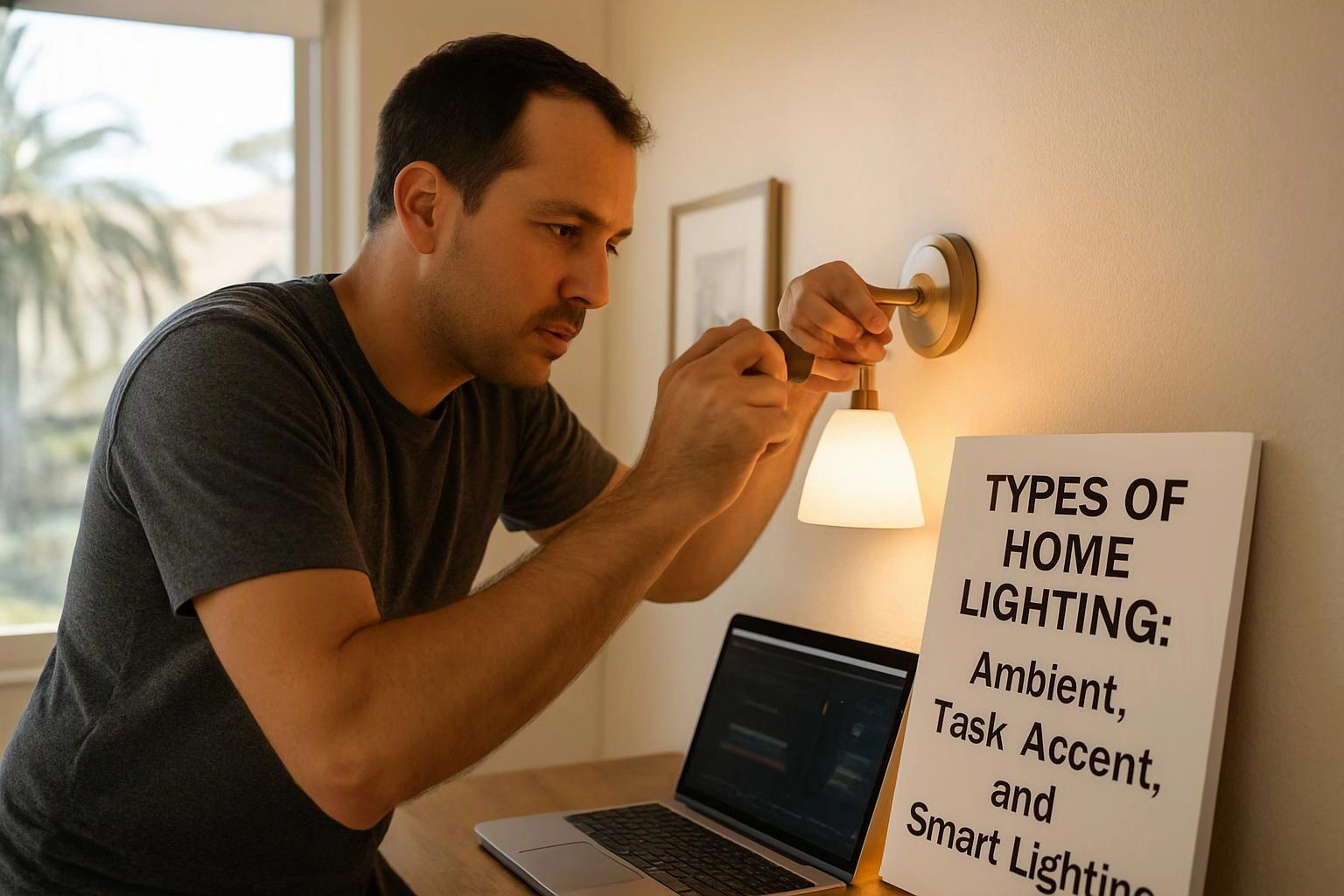
Our team checks light placement and circuit capacity as the layers are combined. We can also connect the plan to Lighting installation services when new fixtures or wiring are needed.
What Changes the Cost of Home Lighting Installation?
Home lighting installation cost varies with the fixture type, wiring access, switch and control needs, circuit requirements, ceiling conditions, and the number of lighting zones; we review those details before preparing a quote, and Free Estimates Available.
A light fixture may need new electrical wiring, a new switch, a dimmer, or smart home wiring. Ceiling access and circuit capacity can also affect the work required.
We inspect the installation conditions, explain what the quote includes, and prepare the exact quote from the selected fixtures, controls, wiring, and lighting plan.
How Center Electric Service Plans Lighting Installation and Smart Controls
Center Electric Service plans the lighting layout, reviews the electrical requirements, installs the selected fixtures and controls, and checks operation before completing the work.
Our crew keeps the installation focused on the chosen design and the electrical conditions found at the property.
What Should You Consider Before Choosing Home Lighting?
Home lighting choices should match the room's function, desired atmosphere, fixture placement, control preferences, and existing electrical system.
Consider how the room is used before choosing a light fixture or control. Our team can help connect those choices to the electrical load and installation conditions.
Questions About Choosing Home Lighting
Can one room use more than one type of lighting?
Yes, one room can use ambient, task, accent, and smart lighting together. We arrange the layers into useful lighting zones based on room function and fixture placement.
Is smart lighting compatible with existing light fixtures?
Smart lighting can be compatible with existing light fixtures when the bulb, switch, dimmer, wiring, and control system match. We check compatibility before selecting the smart lighting components.
What is the difference between a smart bulb and a smart switch?
A smart light bulb adds connected control at the bulb, while a smart switch controls the fixture through the wall switch and circuit. We review the existing wiring and the preferred control method before installation.
Where should task lighting be placed in a kitchen?
Task lighting should be placed near kitchen work surfaces, counters, sinks, and other activity areas. We plan under-cabinet lighting and other fixtures to direct light where the work occurs.
What type of lighting is best for artwork?
Accent lighting is best for artwork because it can direct visual emphasis toward the piece. We review viewing angles, wall placement, brightness, and control needs when planning artwork lighting.
Can existing home wiring support smart lighting controls?
Existing home wiring may support smart lighting controls when the circuit, switch box, neutral requirements, and selected controls are compatible. We inspect the wiring and circuit capacity before installation.
Center Electric Service can review your lighting plan, fixture choices, wiring, and smart controls. Contact us for a clear quote based on the work your home requires.
Get a Free EstimateRelated Resources
How to Choose an Electrician for Home Electrical Work
Brand vs BrandResidential and Commercial Electricians Compared: Choosing the Right Electrical Service Provider
Brand vs BrandLighting installation Companies Worth Comparing in Riverside (2026)
What It SolvesFlickering Lights: Electrical Causes, Risks, and Repair Options