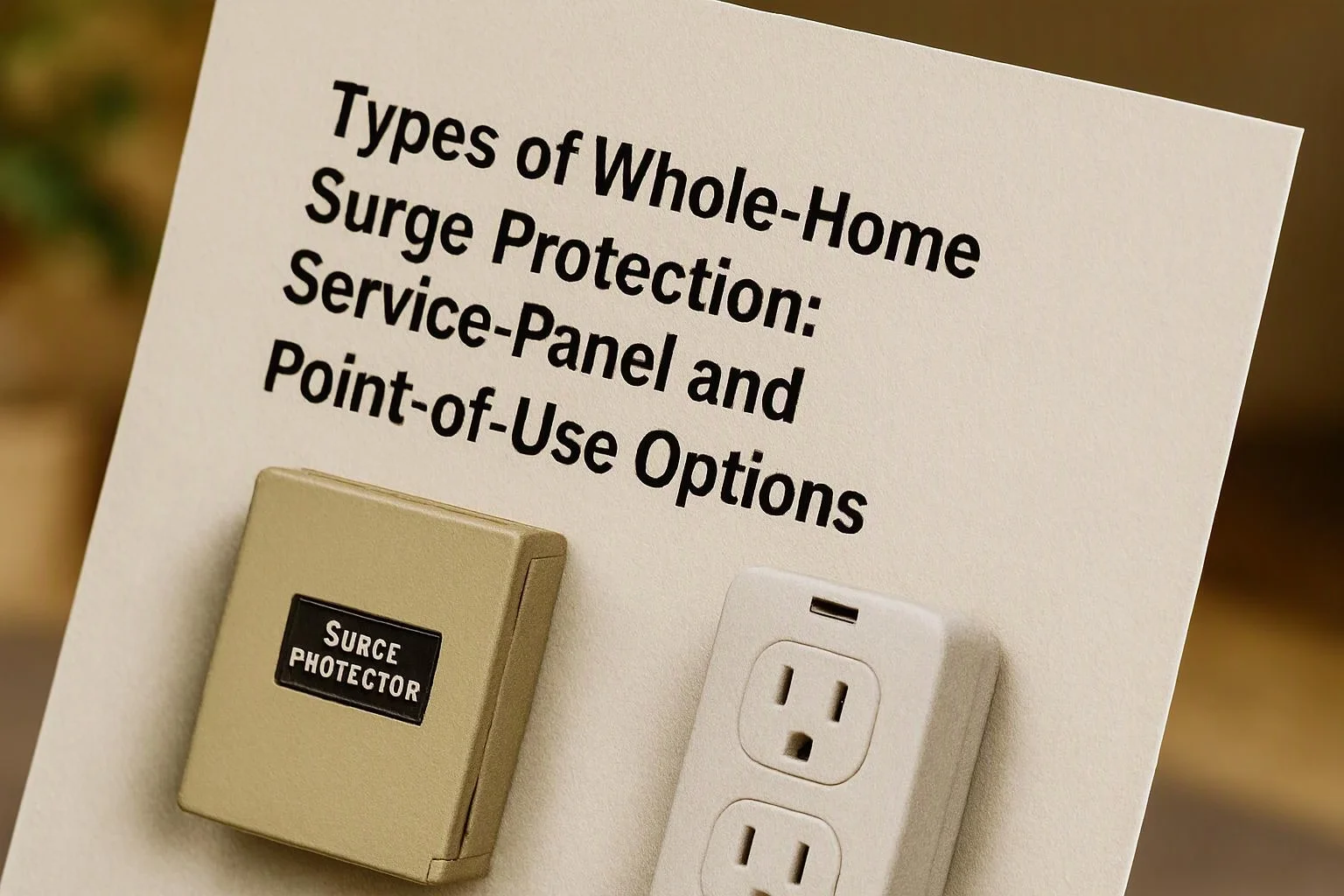
Types of Whole-Home Surge Protection: Service-Panel and Point-of-Use Options
Whole-home surge protection includes service-panel devices that protect branch circuits and point-of-use devices that protect individual electronics. Center Electric Service assesses the electrical system and installs the combination that fits the home’s equipment and protection needs. The choice depends on panel capacity, grounding, service equipment, and connected loads. Free Estimates Available.
Which Types of Whole-Home Surge Protection Are Available?
Whole-home surge protection options include service-panel devices, meter-based devices, hardwired point-of-use protectors, plug-in protectors, and layered protection. Each option sits at a different point in the electrical system and serves a different protection role.
Our team can review the electrical distribution system and recommend protection that matches the home’s panel configuration and connected equipment.
| Type | Key Features | Cost | Best For |
|---|---|---|---|
| Service-panel surge protective device | Installed at the electrical panel to divert transient voltage from branch circuits | Varies | Broad electrical-system coverage |
| Meter-based surge protection | Installed at or near the electric meter and service entrance | Varies | Protection at the incoming service point |
| Hardwired point-of-use surge protector | Connected directly to a circuit or equipment connection | Varies | Dedicated or sensitive equipment |
| Plug-in surge protector | Connects between a receptacle and individual equipment | Varies | Computers and home entertainment equipment |
| Layered surge protection | Combines protection at multiple electrical locations | Varies | Homes with broad and localized protection needs |
Service-Panel Surge Protective Devices
A service-panel surge protective device is an electrical protection unit connected at the service panel to divert transient voltage away from branch circuits. The device works at the electrical panel, where power is distributed to receptacles, lighting, appliances, and other loads.
We use this option when a home needs broad protection across its electrical distribution system. Our team checks panel compatibility, available breaker space, grounding connections, and the condition of the service equipment before installation.
Meter-Based Surge Protection
Meter-based surge protection is a surge protective device installed at the electric meter or meter socket near the service entrance. This location can address surges that enter through the incoming electrical service, including some utility-side surge events.
We evaluate the meter equipment, service entrance, and available installation access before recommending this option. Utility requirements and equipment compatibility can affect whether meter-based protection is suitable for the home.
Hardwired Point-of-Use Surge Protection
A hardwired surge protector is a point-of-use device connected directly to wiring serving selected equipment or a dedicated circuit. This arrangement keeps the protection at a specific load instead of relying on a cord-connected device.
We consider hardwired point-of-use protection for sensitive electronics, HVAC equipment, appliances, and other connected loads that need added protection. Our team checks the circuit arrangement and equipment connection before selecting the installation method.
Plug-In Point-of-Use Surge Protectors
A plug-in surge protector is a cord-connected device placed between a receptacle and electronic equipment. Some plug-in models also function as a power strip, but power-strip capacity does not by itself define the quality of surge protection.
We commonly consider plug-in protection for computer equipment, televisions, networking devices, and home entertainment equipment. The device protects equipment connected through it, so placement and proper receptacle grounding matter.
Layered Surge Protection
Layered surge protection combines service-panel protection with point-of-use protection at selected equipment. The layers place surge diversion at more than one point along the surge path.
We recommend a layered approach when a home needs broad coverage for the electrical system plus added protection for sensitive electronics or high-value connected equipment. Our team matches each layer to the equipment and circuit it serves.
What Does Each Surge Protection Type Protect?
Service-panel protection covers the home’s electrical distribution system, while point-of-use protection adds localized protection for connected equipment. Meter-based protection addresses the service entrance, while plug-in protection focuses on equipment connected through the device.
A service-panel surge protective device can help protect branch circuits from a voltage surge, but it does not make every connected device immune to damage. We review receptacles, grounding, circuit paths, and equipment connections to explain where additional protection may help.
Which Whole-Home Surge Protection Option Fits Your Electrical System?
The suitable surge protection option depends on the panel configuration, grounding system, service equipment, and electronics that need protection. We use the electrical system and connected loads as the basis for the recommendation.
What Changes the Cost of Whole-Home Surge Protection?
Whole-home surge protection cost varies with the protection type, panel or meter configuration, installation access, grounding needs, and whether an electrical panel upgrade is required.
A service-panel surge protective device may involve different work from meter equipment or a hardwired point-of-use installation. We explain which equipment and installation tasks the estimate covers, and we provide a quote after reviewing the electrical system.
An electrical panel upgrade can affect the project when the existing panel lacks compatibility, capacity, or suitable breaker space. Our team identifies that condition before recommending equipment.
How We Assess and Install Surge Protection
Center Electric Service reviews the electrical system, identifies suitable protection points, explains what the estimate covers, and installs the selected equipment. Our process focuses on safe connections and a clear match between the device and the home’s electrical needs.
When Should You Combine Service-Panel and Point-of-Use Protection?
Combining service-panel and point-of-use protection makes sense when the home needs broad electrical-system coverage plus added protection for sensitive or high-value equipment.
Layered surge protection can place a protective device at the service panel and another device near selected electronics, HVAC equipment, or appliances. We assess the whole-home electrical system and connected equipment before choosing the layers.
For installation planning, our Whole-home surge protection service connects the system review with the selected equipment and installation work.
Questions About Whole-Home Surge Protection Types
Does a whole-home surge protector protect every outlet?
Whole-home surge protection can cover the electrical distribution system, but coverage at every outlet depends on the device, wiring, grounding, and connected equipment. Center Electric Service reviews the system and adds point-of-use protection where localized coverage is appropriate.
Can point-of-use surge protection replace a service-panel surge protector?
No, point-of-use surge protection does not provide the same broad coverage as a service-panel surge protective device. Point-of-use equipment protects connected loads, while service-panel protection works at the electrical distribution point.
Can a whole-home surge protector be installed in an older electrical panel?
Yes, an older electrical panel may accept whole-home surge protection when its condition, compatibility, grounding, and available breaker space support the installation. We inspect the panel and explain when an electrical panel upgrade is needed.
Do plug-in surge protectors protect appliances connected to other circuits?
No, a plug-in surge protector primarily protects equipment connected through that device. Appliances on other circuits may need service-panel protection or their own point-of-use protection.
Choose the Right Surge Protection for Your Home
Center Electric Service can review your panel, grounding system, service equipment, and connected loads before recommending a protection plan. Request an estimate that identifies the selected equipment, installation location, access needs, and any panel work included.
Our team can help you decide whether service-panel, meter-based, hardwired point-of-use, plug-in, or layered surge protection fits the electrical system.