
What Is an Electrochemical Sensor?
An Electrochemical Sensor is a gas-sensing device that produces an electrical signal through a chemical reaction. The signal changes as the target gas reaches the sensor’s electrodes. Carbon monoxide alarms commonly use this sensor type because the sensing cell can identify carbon monoxide and support an alarm response within a household detection system.
Quick Facts About Electrochemical Sensor
Category
Gas detection component
Used for
Carbon monoxide detection
Common confusion
Different from a photoelectric sensor
Also called
CO Sensor, Electrochemical gas sensor
Often discussed with
Carbon Monoxide Detector Installation, Smoke Detector Installation
Key Takeaways About Electrochemical Sensor
- Chemical reactions distinguish the target gas from ordinary air.
- The sensor works as part of a complete detection system.
- An electrochemical sensor is not the same as a photoelectric sensor.
How Electrochemical Sensor Works
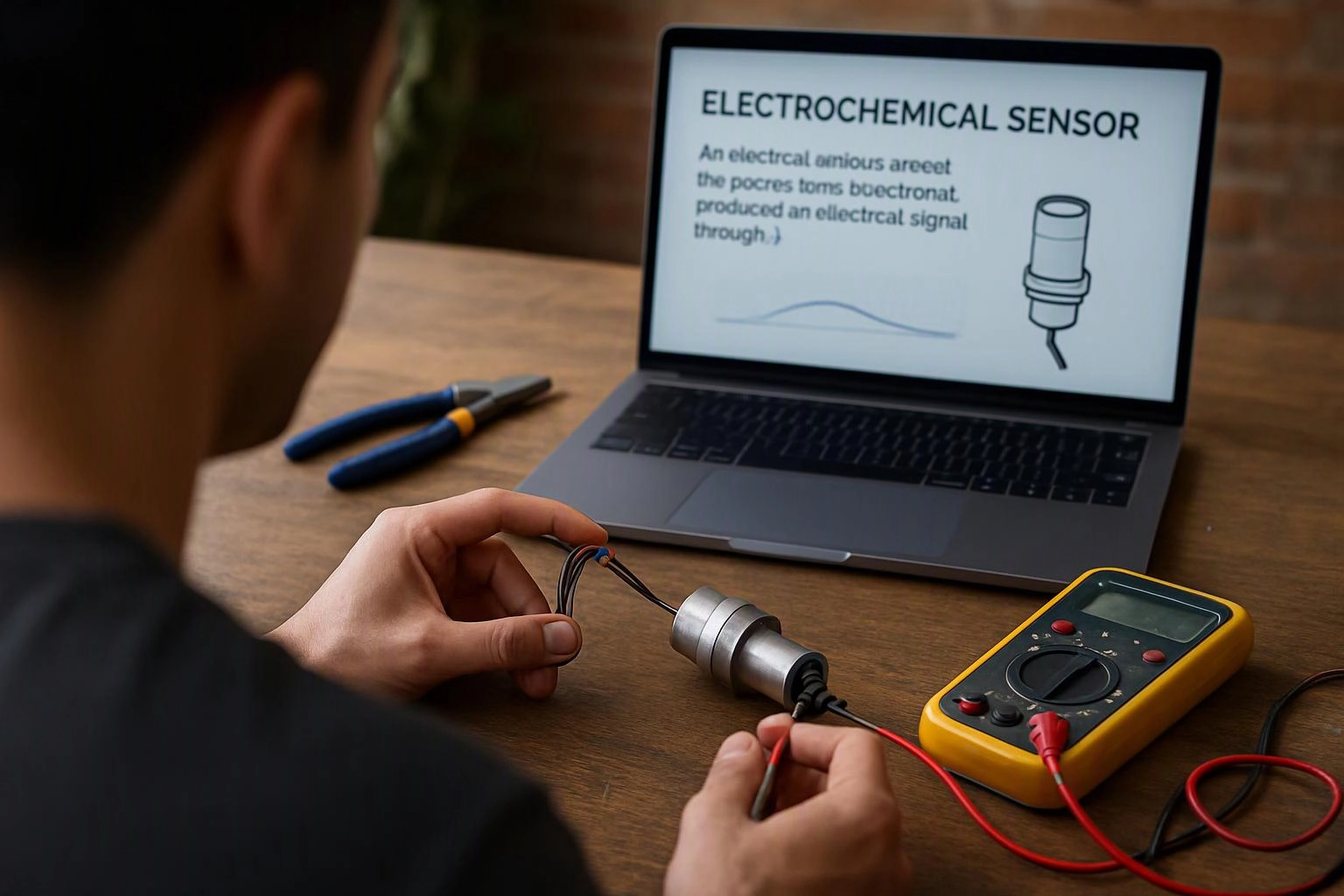
An electrochemical sensor detects a target gas through a reaction inside a sensing cell. The cell contains electrodes and an electrolyte that allow the gas to produce a small electrical current. The detection circuit reads that current and compares it with the alarm’s programmed response level.
Related glossary terms: Photoelectric Sensor, Test/Reset Button.
In a carbon monoxide alarm, carbon monoxide reaches the cell through an opening in the alarm housing. The reaction changes the electrical output as the gas enters the sensor. The alarm uses that output with its sounder, control circuit, and test function to signal a detected condition.
A photoelectric sensor serves a different purpose because it detects changes in light caused by smoke particles. The sensor type must match the hazard that the alarm is designed to detect.

From the Center Electric Service team
When we work on Carbon Monoxide Detector Installation, we check that the alarm uses the intended sensing technology and that the sensor is connected correctly. We also test the complete alarm response, including power, wiring, placement, and the test function. A sensor check is one part of verifying the installed detector.
Electrochemical Sensor in Practice: A Real-World Example
A homeowner requests Carbon Monoxide Detector Installation near a sleeping area. The installed alarm uses an electrochemical sensor to detect carbon monoxide, then sends the sensor signal to the alarm circuit so the sounder can alert occupants.
Related Terms
Photoelectric Sensor
A Photoelectric Sensor is a smoke-detection component that uses a light source and a sensing element…
Test/Reset Button
A Test/Reset Button is a built-in control on a ground-fault circuit interrupter receptacle that checks and…
Center Electric Service
Have Questions About Electrochemical Sensor?
Contact Center Electric Service for practical guidance on Electrochemical Sensor and related 24 hour electrician work in Riverside.