
What Is Load Shedding?
Load Shedding is the controlled reduction of electrical demand by disconnecting selected circuits or equipment. A load-shedding system protects available power capacity when a backup source cannot support every household load at once. The system keeps designated critical circuits energized while temporarily removing nonessential loads, then reconnects them when capacity returns.
Quick Facts About Load Shedding
Category
Electrical load control
Used for
Managing limited backup power
Common confusion
A controlled action, not an uncontrolled outage
Also called
Load Control
Often discussed with
Home battery backup critical-load panel installation, EV charger load-management installation
Key Takeaways About Load Shedding
- It selectively disconnects circuits instead of shutting down the entire electrical system.
- Critical loads stay powered while available capacity is limited.
- Load shedding is not the same as a complete power outage.
How Load Shedding Works
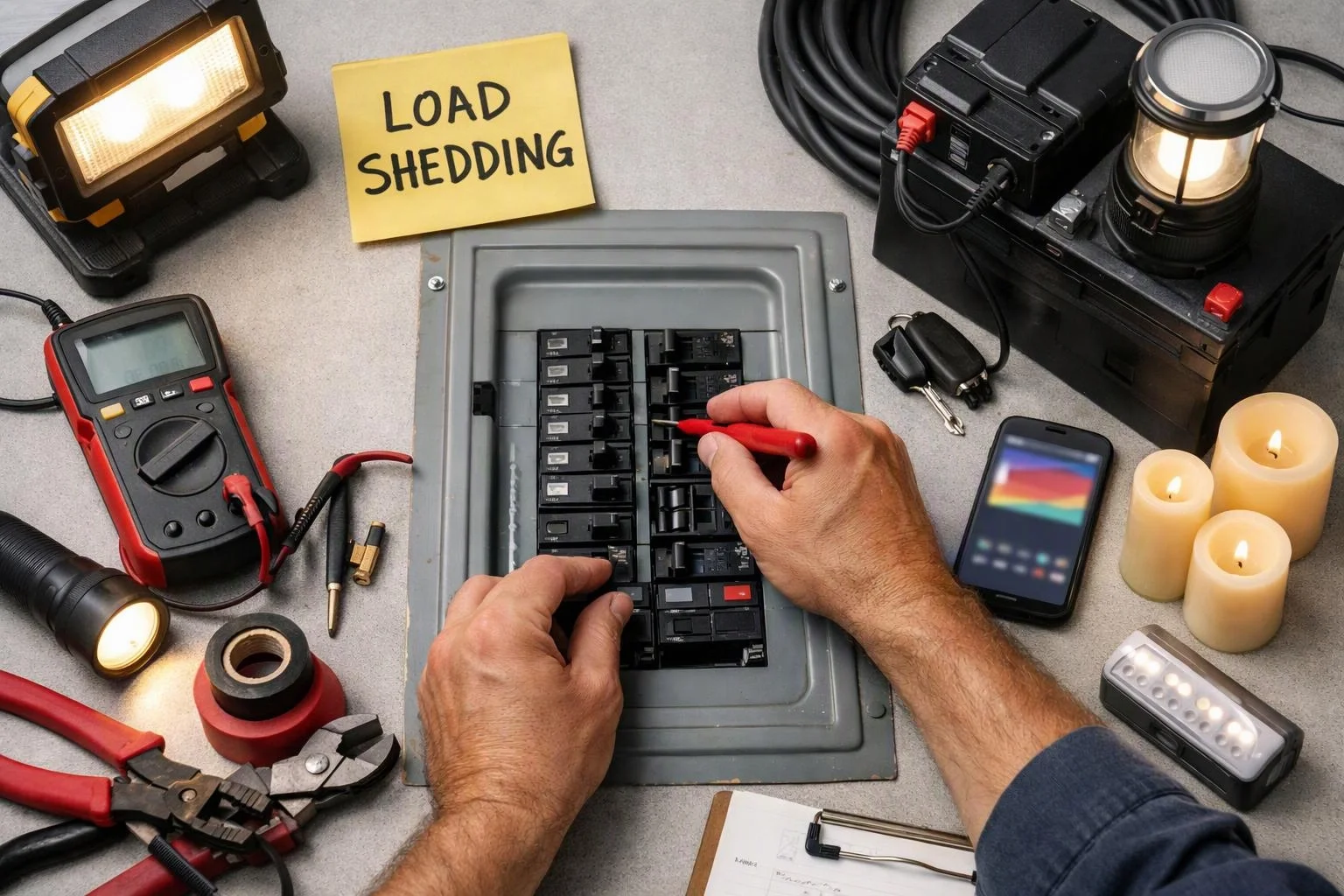
Load shedding works through controls that monitor available electrical capacity and disconnect selected loads when demand reaches the system's limit. A backup system may keep refrigeration, lighting, internet equipment, or medical equipment powered while pausing larger loads. The controls reconnect paused loads when the power source can support them.
Related glossary terms: Load Management, Electrical Load, Transfer Switch.
During home battery backup critical-load panel installation, the electrician identifies which circuits belong on the critical-load panel and which circuits can be interrupted. A critical-load panel separates priority circuits from other household circuits. A transfer switch or related control equipment coordinates the change between normal utility power and backup operation. Proper circuit labeling helps the system shed the intended loads and restore them in an orderly way.
From the Center Electric Service team
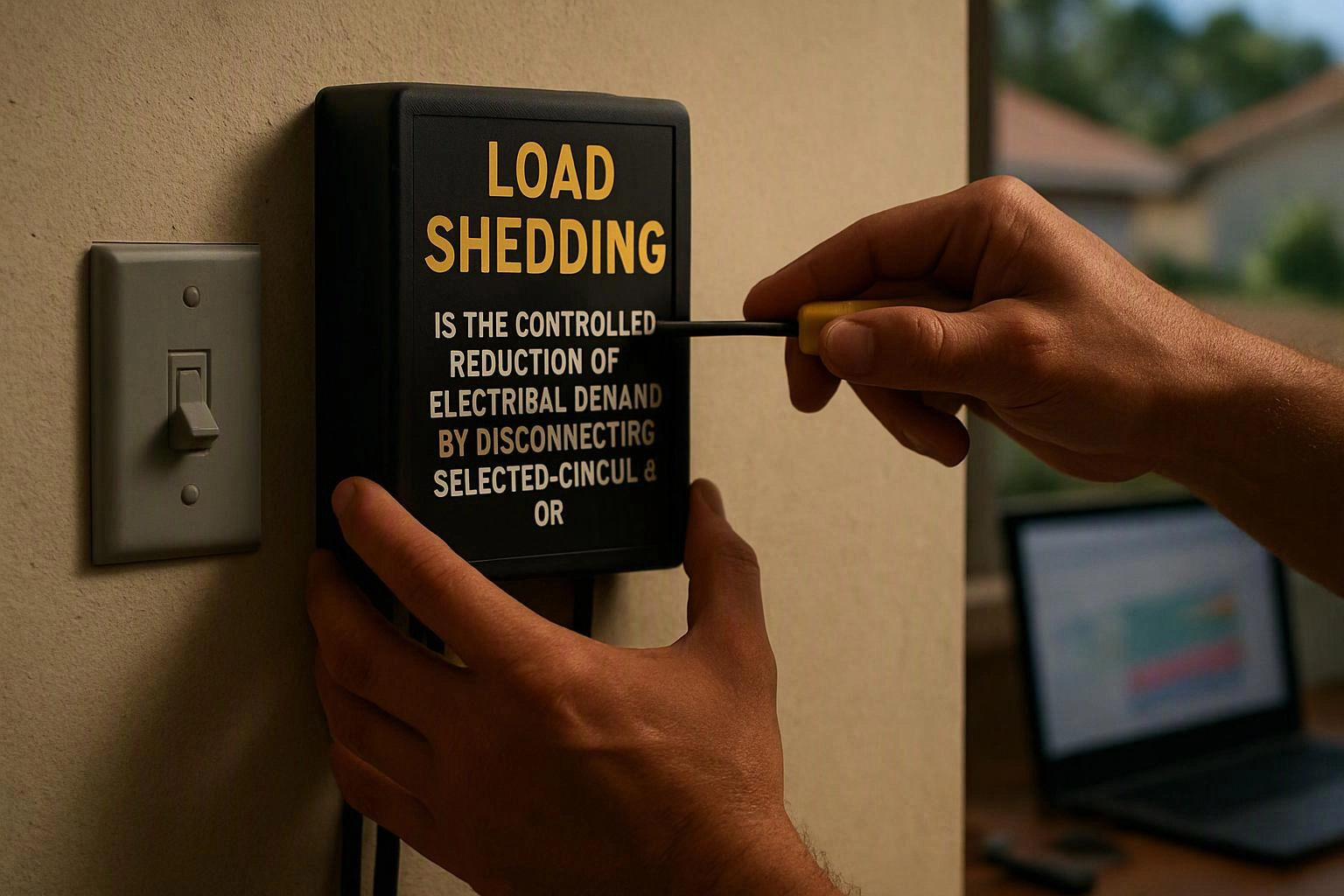
When we plan load shedding for a home battery backup system, we review the circuits that must remain available during an outage. We check panel labeling, load priorities, and control wiring so the system disconnects the intended circuits. We also verify that restored loads do not exceed the backup source capacity.
Load Shedding in Practice: A Real-World Example
A Riverside home may place refrigeration, selected lighting, and internet equipment on a critical-load panel. During a utility outage, load shedding can pause an electric water heater or other nonessential circuit so the battery continues supporting the priority circuits.
Related Terms
Load Management
Load Management is a method of controlling electrical demand so connected equipment stays within the available…
Electrical Load
Electrical Load is the amount of electrical power that connected devices and equipment draw from a…
Transfer Switch
A transfer switch is an electrical switching device that moves selected circuits between a utility supply…
Circuit Directory
Circuit Directory is a labeled panel schedule that identifies which rooms, outlets, appliances, or equipment each…
Center Electric Service
Have Questions About Load Shedding?
Contact Center Electric Service for practical guidance on Load Shedding and related 24 hour electrician work in Riverside.