Planning Bidirectional EV Backup-Power Installation
Planning bidirectional EV backup-power installation requires Center Electric Service to assess vehicle and charger compatibility, map critical loads, review the electrical panel, plan safe islanding, and coordinate permitting and commissioning.
Get a Free EstimateWhat Bidirectional EV Backup Power Requires
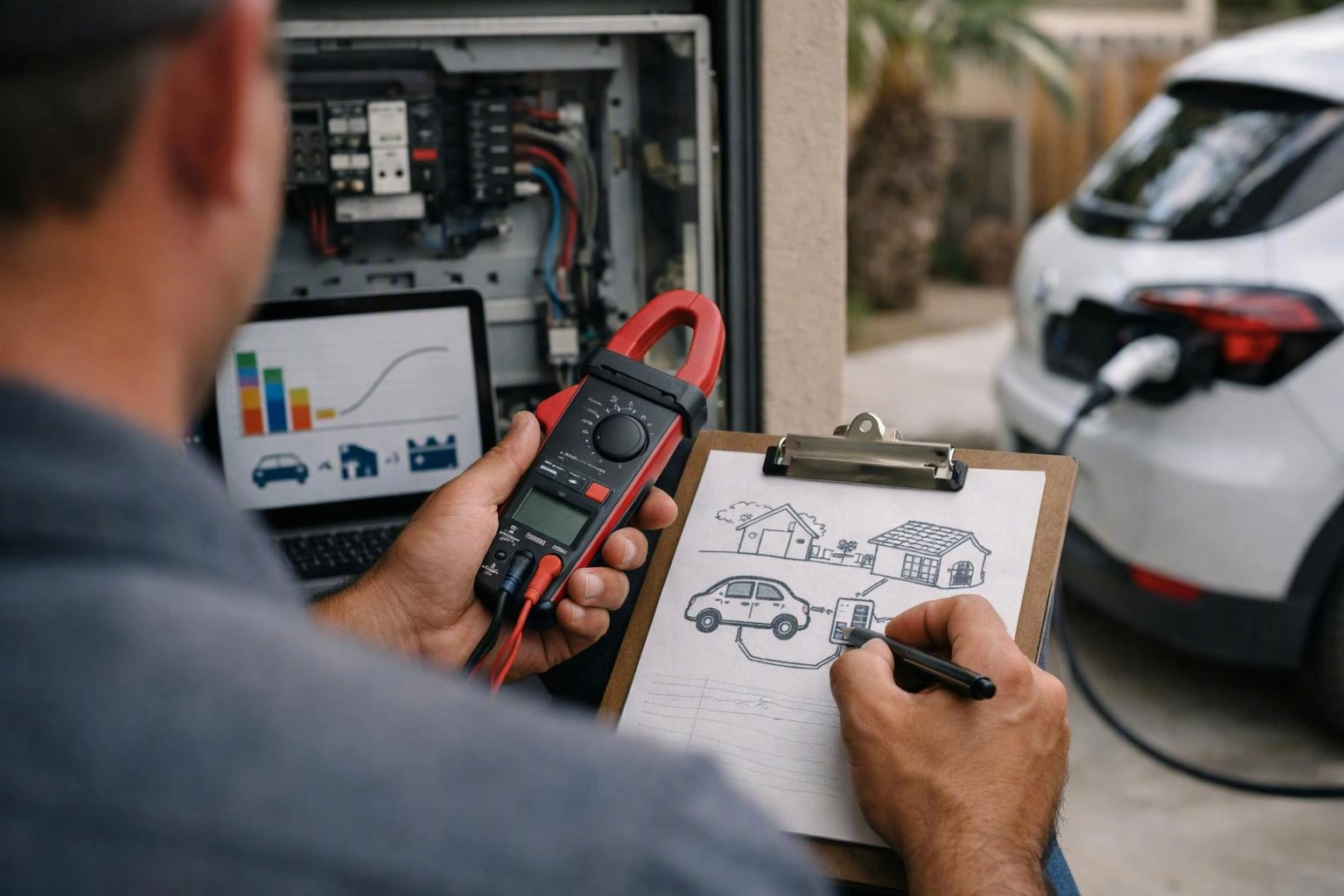
Bidirectional EV backup power requires compatible vehicle and charging equipment, controlled isolation from the utility grid, and an electrical design that routes stored energy to approved home circuits. Center Electric Service plans the electrical connection so the electric vehicle, bidirectional EV charger, and home electrical system work together during normal operation and a grid outage.
Vehicle-to-home power uses energy stored in the EV battery to support selected backup circuits. The design includes an inverter, protection equipment, control wiring, and a safe method to prevent the home from energizing the utility grid.
Our Bidirectional EV backup-power installation planning accounts for backup power needs, electrical safety, and the requirements of the utility and equipment manufacturers.
Signs Your Home Needs a Detailed Backup-Power Plan
A home needs a detailed backup-power plan when the existing electrical system does not clearly show which circuits can be supplied safely. These signs help us identify where planning, circuit separation, or load management is needed.
We review these conditions during the site assessment and connect the findings to the electrical design. That process helps prevent a backup system from being selected before the home can safely support it.
How Vehicle and Home Compatibility Shape the Design
Vehicle and home compatibility shape the design because the EV, bidirectional charger, inverter, service equipment, and control system must operate together during grid-connected and backup conditions. We check manufacturer requirements before planning the wiring or selecting the transfer equipment.
Not every electric vehicle supports vehicle-to-home power. The vehicle must support bidirectional charging, and its charger communication must allow the system to control energy flow safely.
Battery state of charge also affects backup operation. We plan controls that account for the energy reserved for driving, the home’s critical loads, and the operating limits stated by the manufacturer.
Common Causes of Backup-Power Planning Problems
Backup-power planning problems usually begin when equipment, loads, or isolation requirements are reviewed separately. We evaluate these connected conditions as one residential electrical installation.
We address these causes by verifying manufacturer compatibility, completing a load calculation, and designing circuit separation before installation work begins.
How We Plan a Bidirectional EV Backup-Power Installation
Center Electric Service plans a bidirectional EV backup-power installation through a connected electrical review, design, approval, and testing process.
Free Estimates Available after we review the installation. Our estimate explains the equipment, electrical work, protection devices, circuit changes, and site conditions included in the planned work.
How a Critical-Load Panel Supports Home Battery Backup
A critical-load panel supports home battery backup by separating selected essential circuits from loads that the EV or battery system is not designed to supply during an outage. We use circuit separation to direct backup power where it provides the most useful support.
Essential circuits may include a refrigerator, selected lighting, internet equipment, and approved HVAC equipment. The final selection depends on the load calculation, system capacity, equipment instructions, and the household’s priorities.
Our team labels and checks the backup circuits so the transfer equipment and controls operate with a clear load-management plan. This approach connects home battery backup and critical-load panel planning to the actual electrical demands of the home.
Ways to Prevent Backup-Power Installation Issues
Backup-power installation issues are easier to prevent when design decisions are confirmed before equipment is connected. We use the following checks to keep the project aligned with electrical safety and operating requirements.
We document the selected backup circuits and protection approach so the finished system has a clear operating purpose. That documentation also supports commissioning and future service decisions.
What Changes the Cost of This Electrical Installation
The cost of bidirectional EV backup-power installation changes with equipment compatibility, panel capacity, circuit separation, wiring access, protection equipment, permitting, and the amount of electrical work required. Center Electric Service provides Free Estimates Available after reviewing the installation.
A bidirectional EV charger may require different wiring and controls from standard EV charging equipment. An electrical panel upgrade or critical-load panel can add work when the existing service capacity or circuit layout does not support the design.
Conduit routing, service capacity, permit coordination, and site conditions also affect the work included in the estimate. We review these factors at the property and explain what the quote covers before installation begins.
How We Confirm the System Is Ready for Backup Operation
Center Electric Service confirms backup readiness by checking grid isolation, transfer equipment, critical circuits, charger controls, and system operation under the planned backup conditions.
We verify that islanding protection prevents unwanted energizing of the utility grid. We also check that the transfer switch moves the approved circuits into the intended backup mode.
Commissioning includes backup-mode testing, control checks, and review of the selected critical circuits. We use the results to confirm that the vehicle-to-home system follows its design and manufacturer requirements.
Questions About Bidirectional EV Backup Power
Can any electric vehicle provide backup power to a house?
Center Electric Service confirms that an electric vehicle can provide home backup only when the vehicle, bidirectional charger, inverter, controls, and manufacturer requirements support vehicle-to-home power.
What appliances should be connected to a critical-load panel?
A critical-load panel should connect essential circuits such as a refrigerator, selected lighting, internet equipment, and approved HVAC equipment when the load calculation supports them.
Does bidirectional EV backup power require an electrical panel upgrade?
Bidirectional EV backup power requires an electrical panel upgrade when the existing panel lacks the capacity, space, protection, or circuit arrangement needed for the planned system.
How does an EV stay isolated from the utility grid during an outage?
An EV stays isolated from the utility grid through a transfer switch and islanding protection that disconnect the approved home circuits from the grid before backup power is supplied.
Center Electric Service plans, installs, and commissions electrical systems for vehicle-to-home backup when the vehicle and home are compatible. Contact us for an estimate that reflects the equipment, panel capacity, critical loads, and site conditions.