Signs Your House Needs Whole-Home Rewiring
Signs your house needs rewiring include recurring electrical faults, flickering lights, warm outlets, burning smells, damaged wiring, and circuits that cannot safely support your home. Center Electric Service checks the electrical system, identifies whether rewiring is needed, and explains the work required.
Which Signs Mean Your House May Need Rewiring?
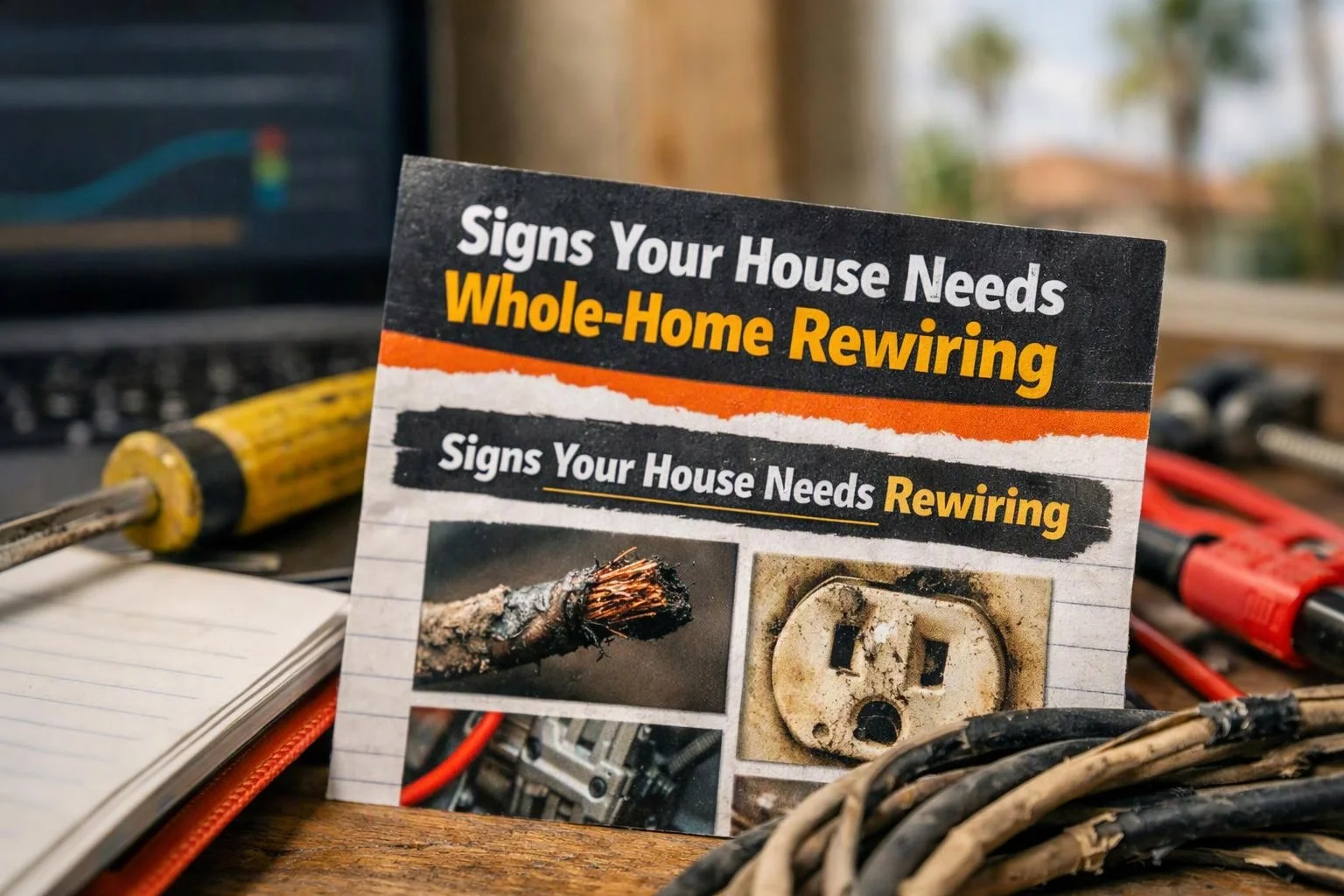
A house may need rewiring when recurring electrical problems, visible wire damage, overheating components, or an outdated electrical system indicate that repairs cannot address the underlying risk.
Whole-home rewiring may be appropriate when warning signs affect several areas of the house. We inspect the related circuits to determine whether the issue is local or system-wide.
What Do These Electrical Warning Signs Tell You?
An electrical fault shows that a circuit, connection, protective device, or section of wiring needs assessment before the problem worsens. We use the reported symptoms and circuit testing to narrow down the cause.
An overloaded circuit may trip its circuit breaker, while a loose connection can create heat or buzzing electrical sounds. Insulation damage can expose conductors to contact, moisture, or further deterioration.
Electrical safety depends on sound wiring, suitable circuit protection, reliable grounding, and connections that remain secure under the electrical load. Our team checks these factors before recommending repair work or rewiring.
When Does a Problem Point to Rewiring Instead of a Local Repair?
Whole-home rewiring becomes a concern when faults recur across multiple circuits, wiring damage is widespread, or the existing system cannot safely support the home's electrical demand.
A local electrical repair may address one damaged outlet, switch, connection, or short section of wiring. We look at the wider wiring condition and circuit capacity before deciding whether that repair addresses the underlying problem.
Repeated faults in different rooms can indicate aging or damaged wiring throughout the house. Our rewiring assessment separates an isolated electrical fault from a system-wide need.
What Can You Do Yourself and What Should We Check?
You can make safe observations and reset a tripped circuit breaker once, while Center Electric Service diagnoses wiring faults and evaluates whether rewiring is needed.
Do not remove outlet covers, open the electrical panel, or handle exposed conductors. Stop using equipment that shows heat, smoke, sparking, or visible damage.
| Factor | What you can do yourself | What we do |
|---|---|---|
| Electrical troubleshooting | Note when the problem occurs and which outlets, switches, or lights are affected. | Trace the symptoms and perform diagnostic testing on the affected circuits. |
| Circuit breaker | Reset a tripped breaker once if there is no heat, smoke, odor, or visible damage. | Identify why the breaker trips and assess the circuit load and wiring. |
| Outlet safety | Stop using an outlet that is warm, discolored, loose, sparking, or producing an odor. | Inspect the outlet, connections, branch circuit, and related wiring. |
| Electrical inspection | Record visible concerns without opening electrical components. | Examine accessible components and assess the condition of the electrical system. |
| Diagnostic testing | Avoid testing live wiring or removing covers. | Use electrical testing to locate faults and define the required repair or rewiring scope. |
How Does Center Electric Service Assess a House for Rewiring?
Center Electric Service assesses the electrical system by tracing reported symptoms, examining accessible components, testing affected circuits, and defining the work required.
What Does a Whole-Home Rewiring Plan Include?
A whole-home rewiring plan identifies the wiring, circuits, devices, grounding, protection, and access work needed to bring the electrical system to a safer functional condition.
The plan may address the electrical panel, branch circuits, receptacles, switches, junction boxes, and grounding conductors. We match the planned circuit protection to the electrical load and the way the home is used.
Our team also considers access to concealed wiring and the finish work needed after wiring routes are opened. The final scope explains which components require replacement, repair, testing, or adjustment.
For related panel concerns, the guide “Signs You Need an Electrical Panel Upgrade” can help explain when panel capacity deserves closer review. [Whole-home rewiring]
What Changes the Scope of Your Rewiring Work?
The scope of whole-home rewiring changes with the wiring condition, house layout, access to concealed runs, electrical load, and panel requirements.
House layout affects how far branch circuits must run and where devices can be placed. Wall and ceiling access affects the work needed to reach concealed wiring and complete access and restoration.
Existing wiring condition determines whether the work involves damaged-wire replacement, branch-circuit rewiring, grounding repair, or broader system replacement. Panel capacity and circuit count affect the equipment and wiring needed to support the electrical load.
Required repairs may include outlet replacement, switch replacement, panel work, grounding, or circuit protection changes. Free Estimates Available. We base the exact quote on inspection findings, access, wiring condition, panel work, circuit requirements, and finish restoration.
When Should You Stop Using a Circuit?
Stop using a circuit when you notice burning smells, smoke, sparking, hot electrical components, exposed conductors, or repeated breaker trips, and contact Center Electric Service for assessment.
A sparking outlet, electric shock, or hot circuit breaker can signal an active safety concern. Turn off the affected circuit only if you can do so safely without touching damaged components.
Keep away from exposed wires and do not continue resetting a breaker that trips again. We inspect the circuit, locate the fault, and explain the repair or rewiring work required.
Questions About House Rewiring Signs
Can flickering lights mean the whole house needs rewiring?
Yes, flickering lights can indicate a local connection problem or a wider wiring fault. Center Electric Service checks the affected light, circuit, panel connections, and related wiring before recommending local repair or whole-home rewiring.
Is it safe to keep resetting a circuit breaker that keeps tripping?
No, repeated breaker trips mean the circuit needs assessment. Stop using the circuit and have us check for an overload, short, loose connection, damaged insulation, or another electrical fault.
Can old wiring cause burning smells or warm outlets?
Yes, old or damaged wiring can contribute to overheating, burning smells, and warm outlets. We inspect the outlet, connections, insulation, circuit load, and protective devices to identify the cause.
Can Center Electric Service determine whether I need rewiring or troubleshooting?
Yes, Center Electric Service can determine whether the issue calls for electrical troubleshooting and diagnostics, a local repair, or whole-home rewiring. We test the affected circuits and assess the broader house electrical system before defining the work.
Whole-home rewiring requires a clear assessment of the wiring, panel, circuits, grounding, protection, and access needs. Contact Center Electric Service for an inspection and an exact quote based on your home's conditions.
Get a Free EstimateRelated Resources
Electrical Panel Upgrade Process: What to Expect Step by Step
How It WorksWhole-Home Rewiring Process: Inspection, Planning, Installation, and Testing
Compared ToElectrical Panel Upgrade vs. Panel Replacement: Which Option Fits Your Property?
Compared ToWhole-Home Rewiring vs. Partial Rewiring: Comparing Electrical Repair Options