Describe the fan symptom
We note whether the fan is dead, slow, noisy, loose, or missing light output. The symptom helps guide the first checks.
We repair ceiling fans for Riverside homes and businesses. Our electricians check the fan, wiring, switch, and light kit for safe operation.
A working fan restores air movement without leaving a known electrical fault in place.
Testing the light kit and switch helps separate a fixture problem from a wiring problem.
Checking the mounting point helps address wobble before it damages the fan or ceiling connection.
Ceiling Fan Repair is an electrical service that restores safe operation to a fan, its controls, wiring, and light kit.

Ceiling fan repair covers faults in the fan motor, blade assembly, mounting point, wall switch, remote control, light kit, and supply wiring. We start with the symptom you see, then trace the related circuit and inspect accessible connections. A slow fan does not always need a new motor. A dead light does not always mean the whole fixture needs replacement. Our electricians test the fault first, then explain whether repair, part replacement, or a broader wiring fix fits the property. We also look for failure risks such as loose conductors, warm switches, damaged insulation, and unstable mounting. If the fan is shaking heavily, sparking, or producing a burning smell, turn it off and request electrical assistance.
We note whether the fan is dead, slow, noisy, loose, or missing light output. The symptom helps guide the first checks.
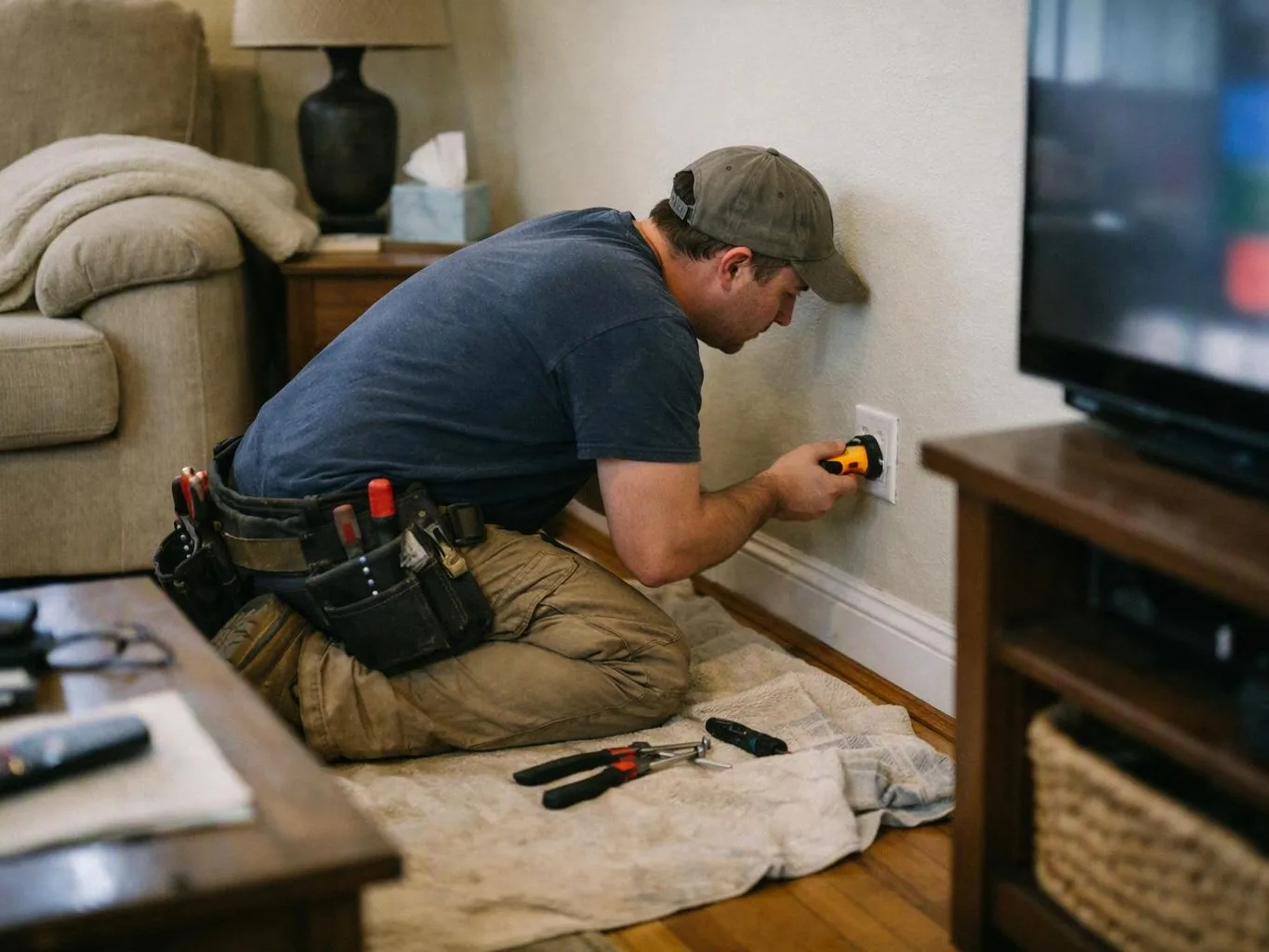
We make the work area safe, then inspect the switch, wiring, controls, and fan connections before touching repair parts.
We examine blade movement, mounting hardware, and visible support points when the fan wobbles, shakes, or makes noise.
We use electrical testing and visual checks to separate a supply issue from a switch, light kit, control, or motor problem.
We review the repair scope and provide a free estimate before beginning the recommended electrical work.
A few details help us assess the fan safely and focus the first visit.
We diagnose the fan, switch, controls, and wiring before recommending a repair or replacement path.
We isolate power, inspect exposed connections, and test the fixture before returning a repaired fan to use.
We explain the observed fault, recommended repair, and estimate before beginning ceiling fan electrical work.
Is your fan wobbling, humming, or losing its light? Request an estimate for your job, and urgent requests get priority scheduling.
A ceiling fan can keep spinning while its light stops working. The fault may sit in the bulb, socket, light kit, switch, or wiring, so replacing bulbs alone may not solve it. Leave the light off if the socket is hot, scorched, or sparking. We can test the light circuit and explain the repair path.
A fan that begins to wobble can place stress on its mounting point and connected wiring. Loose hardware, uneven blades, or a weak support connection can produce similar movement. Stop the fan if the shaking grows or the canopy shifts. We inspect the mount, blade assembly, and electrical connection before recommending repair.
A slow fan with a hum may have a control, motor, capacitor, or wiring problem. The sound and speed change help us narrow the fault, but the visible symptom does not identify the failed part by itself. Turn the fan off if it smells hot, then share the symptom with us so we can test the circuit and fan.