
What Is a Capacitor?
A capacitor is an electrical component that stores and releases energy in a circuit. In a ceiling fan, the capacitor helps create the phase shift needed for the motor to start and run. Its electrical value affects motor behavior, fan speed, and torque. A failed capacitor can leave a fan humming, slow, or unable to start.
Quick Facts About Capacitor
Category
Motor circuit component
Used for
Starting and regulating motor operation
Common confusion
Often mistaken for a battery or circuit breaker
Also called
Fan capacitor, Motor capacitor
Often discussed with
Ceiling fan installation, Electrical troubleshooting and diagnostics
Key Takeaways About Capacitor
- A capacitor stores electrical energy for controlled release.
- Ceiling fans use capacitors to support motor starting and speed control.
- A capacitor is not the same as a circuit breaker.
How Capacitor Works
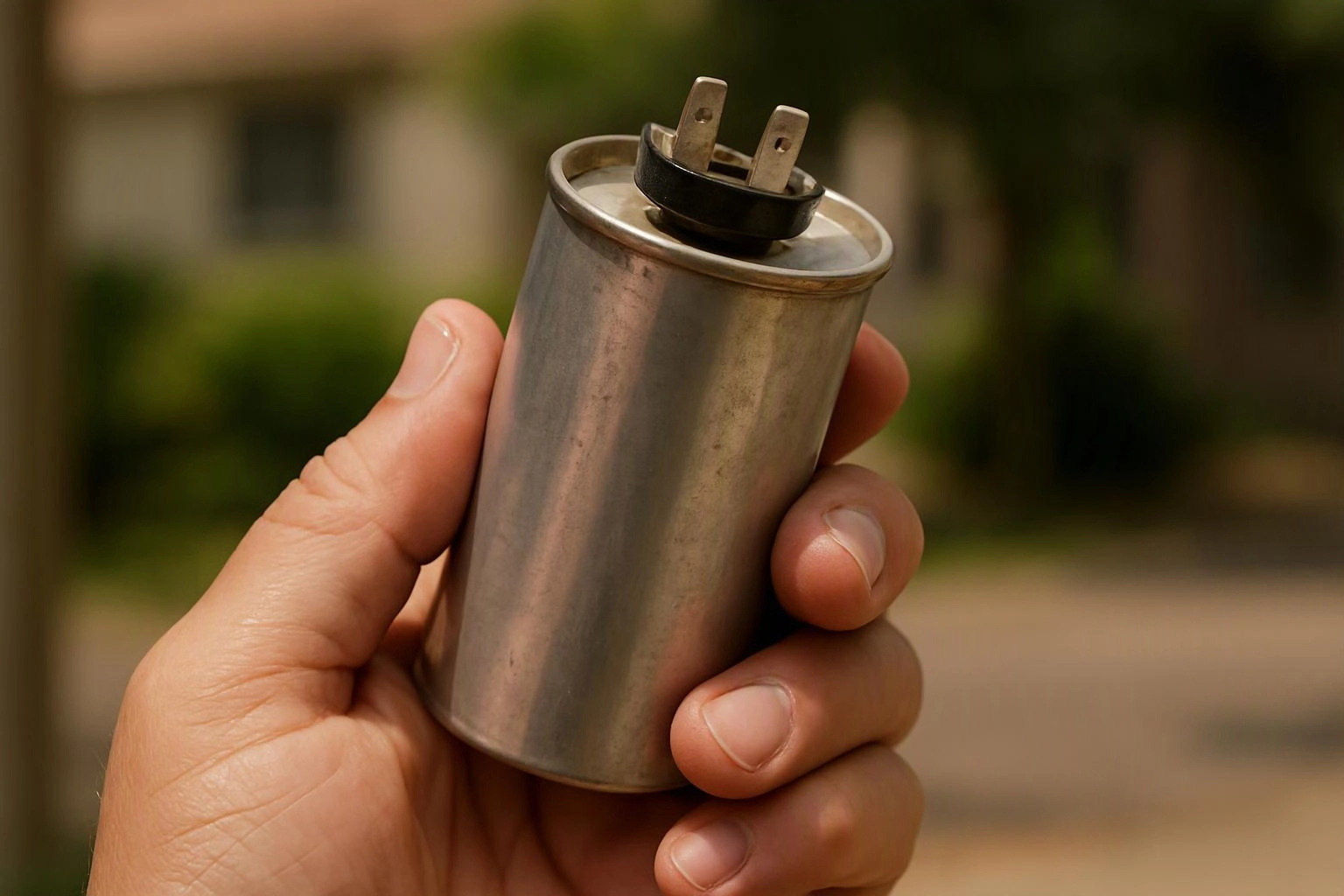
A capacitor stores electrical charge between conductive surfaces and releases that charge as the circuit requires. The component creates a phase difference between motor windings. That difference produces the magnetic action needed for a ceiling fan motor to start turning and continue running.
Related glossary terms: Ceiling fan downrod, Dimmer switch, Transformer.
Ceiling fan capacitors are selected for the motor design and control system. A multi-speed fan may use different capacitance paths as the wall control changes speed. A damaged capacitor can cause weak airflow, unusual humming, difficult starting, or a motor that runs at only one speed. Testing requires checking the circuit condition and comparing the component's behavior with the fan's wiring diagram. The ceiling fan motor and speed control must be considered together because a similar symptom can come from a switch, connection, or motor fault.
From the Center Electric Service team
When we inspect a ceiling fan, we check the capacitor alongside the motor connections and speed control. We look for symptoms that match the fan's wiring and operating behavior. A replacement must match the equipment requirements, not just the component's physical size.
Capacitor in Practice: A Real-World Example
A ceiling fan may hum after its wall switch is turned on while the blades barely move. A faulty capacitor can prevent the motor from developing enough starting action, so the fan may need component testing before installation work continues.
Related Terms
Ceiling fan downrod
A ceiling fan downrod is a rigid tube that connects a ceiling fan motor to its…
Dimmer switch
A dimmer switch is a wall control that adjusts the electrical power delivered to a compatible…
Transformer
A transformer is an electrical device that changes alternating-current voltage from one level to another through…
Wiring diagram
A wiring diagram is a visual plan that shows how electrical conductors, devices, terminals, and power…
Center Electric Service
Have Questions About Capacitor?
Contact Center Electric Service for practical guidance on Capacitor and related electrical services work in Riverside.